As global consensus on carbon neutrality goals deepens, energy conservation and emissions reduction in the industrial sector have become a crucial component in achieving this objective. Among the many energy-saving materials available, ceramic fibre blankets are gradually emerging as a star product in the field of industrial energy conservation, thanks to their excellent thermal insulation properties and environmental credentials. Today, Mu Yi will explore in depth how ceramic fibre blankets can help achieve energy savings of over 30 per cent in the era of carbon neutrality, as well as their application prospects across various industrial sectors.
I. The Energy-Saving Principles of Ceramic Fibre Blankets
Ceramic fibre blankets are lightweight, flexible thermal insulation materials manufactured from high-purity ceramic fibres using specialised processes. Their core energy-saving principle lies in their low thermal conductivity and excellent thermal insulation properties. When applied to high-temperature equipment such as industrial kilns and pipework, ceramic fibre blankets effectively block the transfer of heat and reduce heat loss, thereby improving the thermal efficiency of the equipment and reducing energy consumption.
Specifically, the loose fibre structure of ceramic fibre blankets creates a large number of microscopic air pockets; the air within these pockets has a low thermal conductivity, thereby significantly reducing overall heat transfer. Furthermore, ceramic fibre blankets possess excellent high-temperature resistance, remaining stable in high-temperature environments and ensuring the longevity of their thermal insulation performance.
II. Applications of Ceramic Fibre Blankets in Industrial Energy Conservation
Industrial Kilns
In industrial kilns within sectors such as ceramics, glass and metallurgy, ceramic fibre blankets are widely used for thermal insulation on kiln walls, roofs and doors. By replacing traditional heavy refractory bricks or castables, ceramic fibre blankets can reduce heat loss from kilns and improve their thermal efficiency. According to actual measurement data, kilns retrofitted with ceramic fibre blankets for thermal insulation can achieve energy savings of over 30 per cent.
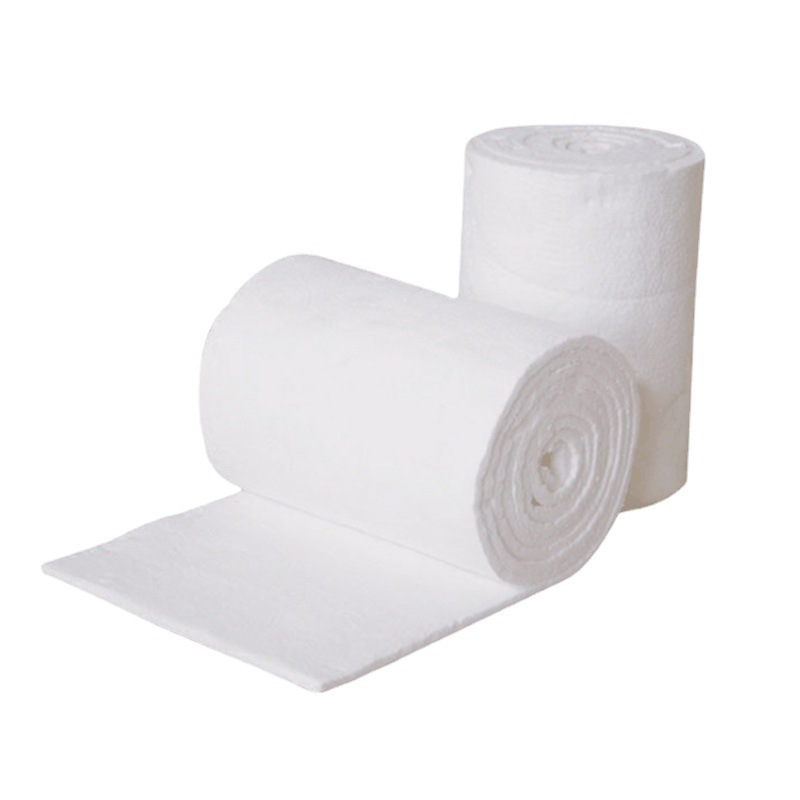
Ceramic Fiber Blanket
High-Temperature Piping
In industries such as petrochemicals and power generation, the thermal insulation of high-temperature piping is equally important. Due to their lightweight, flexible nature and ease of installation, ceramic fibre blankets are widely used to wrap high-temperature pipes. This not only reduces heat loss and improves the thermal efficiency of the pipework but also effectively prevents burns to personnel and damage to equipment.
Other High-Temperature Equipment
In addition to industrial kilns and high-temperature pipework, ceramic fibre blankets can also be applied to various other high-temperature equipment, such as heating furnaces, reactors and drying ovens. Through appropriate thermal insulation design, ceramic fibre blankets can reduce the energy consumption of this equipment and improve production efficiency.
III. Environmental Characteristics of Ceramic Fibre Blankets
In the era of carbon neutrality, environmental characteristics have become one of the key criteria for assessing the quality of materials. Ceramic fibre blankets not only offer excellent energy-saving performance but also possess favourable environmental characteristics.
Pollution-free: The raw materials for ceramic fibre blankets are primarily natural minerals or industrial waste residues, which are melted at high temperatures to form fibrous material. No harmful substances are produced during the entire manufacturing process, and the product itself is non-toxic, harmless and pollution-free.
Recyclable: At the end of their service life, ceramic fibre blankets can be recycled and reused. Through recycling processes, waste ceramic fibre blankets can be transformed into new thermal insulation materials or other useful products, thereby achieving the circular use of resources.
IV. Market Prospects for Ceramic Fibre Blankets
With the continuous advancement of carbon neutrality targets and the ever-increasing demand for industrial energy efficiency, the market prospects for ceramic fibre blankets are extremely promising. According to forecasts by market research organisations, market demand for ceramic fibre blankets will continue to grow in the coming years, with particularly broad application prospects in energy-intensive sectors such as petrochemicals, power generation and metallurgy.
At the same time, as technology continues to advance and costs fall, the performance of ceramic fibre blankets will improve further, whilst prices will become more affordable. This will further drive their widespread adoption in the industrial sector, making a greater contribution to industrial energy efficiency and the achievement of carbon neutrality targets.
V. Conclusion
In the era of carbon neutrality, ceramic fibre blankets are gradually emerging as a star product in the field of industrial energy conservation, thanks to their excellent energy-saving performance and environmentally friendly characteristics. Through appropriate application and promotion, ceramic fibre blankets can reduce the energy consumption of industrial equipment, improve production efficiency, and make a significant contribution to sustainable development in the industrial sector and the achievement of carbon neutrality targets. In the future, with continuous technological progress and market expansion, the application prospects for ceramic fibre blankets will become even broader.