In the past, many steel rolling mills suffered from poor thermal insulation, resulting in significant temperature differences across the cross-section of the slab. This large temperature differential (approximately 50 °C) directly affected the yield of high-quality finished plates, including aspects such as thickness accuracy, temperature accuracy and flatness. Furthermore, as the insulation covers were insufficient in height, they were frequently damaged by warped steel strips, thereby affecting normal operation.
Existing insulation covers in steel rolling mills require an insulation layer thickness exceeding 100 mm and involve the use of large quantities of ceramic fibre blankets. These covers are used on the discharge roller conveyors of steel rolling production lines. They offer advantages such as thinness, light weight, ease of manufacture and a simple production process.
Ceramic Fibre Blanket Insulation Cover
The insulation cover comprises an insulation cover shell, an insulation layer (ceramic fibre blanket) and a composite insulation coating; the insulation layer of this utility model consists of the insulation layer (ceramic fibre blanket) and the composite insulation coating. Whilst providing the same insulation performance as existing technologies, its thickness is equivalent to one-third of that of existing technologies, reducing the volume by approximately 70 per cent and minimising the space occupied by the entire equipment.
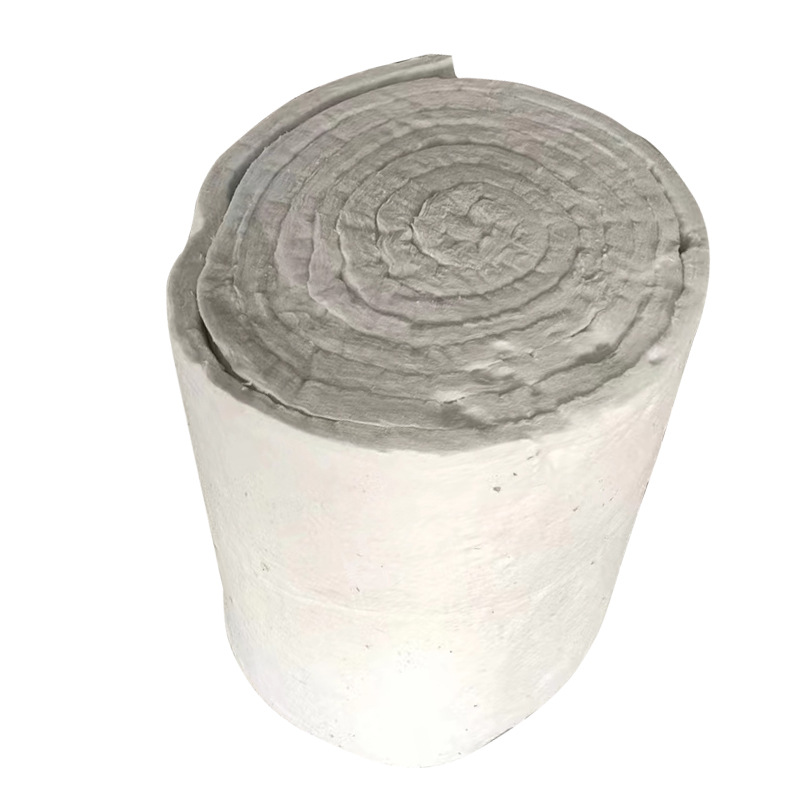
Advantages of using ceramic fibre blankets for heat shields in steel rolling mills:
1. The new heat shield requires no large number of fasteners, saving on materials; the manufacturing process is simple and convenient, it is easy to process, reducing manufacturing time and improving production efficiency.
2. With a low thermal conductivity and a thermal reflectance of over 90 per cent, it provides excellent thermal insulation. A ceramic fibre blanket just 100 millimetres thick is sufficient to maintain an internal temperature of 1,100 degrees; direct contact with the external environment is prevented by the insulation layer, thereby further reducing heat loss and achieving superior thermal insulation.
3. The new insulation cover reduces temperature drop during rolling, thereby better ensuring the entry condition for finish rolling and the stability of slab passage.
4. It reduces fuel consumption in the heating furnace;
5. It minimises temperature loss during the in-line rolling process. Provided the entry temperature for finish rolling remains the same, the heating temperature of the furnace can be appropriately lowered, thereby improving the quality of the finished slab.
6. As the temperature uniformity inside and outside the slab has been significantly improved, the resistance encountered by the slab during rolling is more consistent, which greatly aids in improving the slab’s shape.
7. It increases the number of rolling kilometres, utilises the production capacity of the rolling mill more effectively, and reduces investment, operating and maintenance costs.