Against the backdrop of the rapid development of prefabricated construction, ceramic fibre boards have become a key material in the fields of industrial furnaces, high-temperature piping and building insulation, owing to their excellent high-temperature resistance, low thermal conductivity and lightweight properties. Today, Mu Yi will systematically analyse the production standards for prefabricated components made from ceramic fibre boards, drawing on the latest industry standards and typical engineering case studies, to provide a practical technical guide for the prefabricated construction sector.
I. Material Properties and Classification Standards
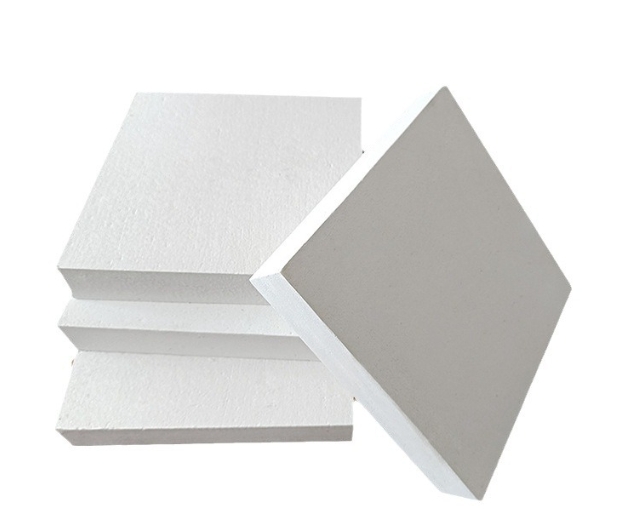
Ceramic fibre boards are refractory materials produced using a wet vacuum moulding process. Through stages such as vacuum adsorption and dehydration drying, they form a dense structure, with their core performance indicators directly influencing the quality of the components:
Temperature Grading
Product classifications cover standard-grade (1,100°C), high-purity (1,400°C) and zirconia-containing (1,770°C) types, suitable for various temperature-resistant applications. For example, the insulation layer of a 300-metric-tonne steel ladle utilised 10-millimetre-thick nano-ceramic fibre boards, reducing the shell temperature from 422°C to 280°C and improving heat reduction efficiency by 34 per cent.
Physical Properties
Thermal conductivity: 0.06–0.085 W/m·K at 200°C, rising to 0.112–0.126 W/m·K at 600°C, representing a 24 per cent reduction compared to traditional high-alumina castables.
Compressive strength: Standard products achieve 0.5 MPa, whilst the high-density type (240–400 kg/m³) can withstand lateral pressure of 1.2 MPa, meeting the support requirements for the permanent layer.
Thermal stability: Linear shrinkage rate ≤ –3.5% after heating at 1,000 °C for 24 hours, ensuring no deformation during long-term use.
Customised Specifications
Standard dimensions are 900 × 600 × 10–100 mm, supporting modular design. A cement rotary kiln project utilised customised 50 mm-thick panels to achieve a seamless fit between the insulation layer and the kiln body, reducing heat loss by 18 per cent.
II. Standardisation of the Production Process
1. Raw Material Pre-treatment
Fibre cotton preparation: The three-roll centrifugal spinning method is employed, in which raw materials with an Al₂O₃ content of ≥45% are melted and spun into fibres, with the fibre diameter controlled at 3–5 μm and slag ball content ≤8%.
Additive formulation: Inorganic binders (such as silica sol) and toughening agents (3–5% metallic silicon powder) are added to enhance the material’s resistance to spalling. Trials at a certain steelworks demonstrated that the spalling volume of the toughened material was reduced by 50% following thermal shock at 1,400 °C.
2. Moulding Process
Wet vacuum moulding: The fibre mat is mixed with a water-based slurry and injected into a metal mould with drainage holes, where it is shaped by vacuum suction. The surface flatness of the mould must be ≤1 mm/2 m to prevent component deformation.
Dry pressing: Suitable for the production of high-density boards; pressure is controlled at 15–20 MPa, with a holding time of ≥30 seconds to ensure uniform density.
3. Heat Treatment and Finishing
Curing process: A stepwise temperature ramp is employed: drying at 110 °C for 24 hours → holding at 350 °C for 4 hours → sintering at 650 °C for 2 hours to eliminate internal stresses.
Cutting accuracy: CNC laser cutting machines are utilised, with dimensional deviations controlled within ±1 mm and hole positioning accuracy of ≤0.5 mm, to meet the modular installation requirements of prefabricated buildings.
III. Quality Control System
1. Process Inspection
Online monitoring: Pressure sensors are installed during the moulding process to monitor vacuum levels (≥-0.08 MPa) and pressing pressure in real time; the machine automatically stops and adjusts in the event of abnormal data.
Sampling Frequency: 5 per cent of components from each batch are randomly selected for compressive strength testing (GB/T 5072-2011) and thermal conductivity testing (GB/T 10294-2008); non-conforming products must be traced back to the relevant raw material batch.
2. Finished Product Acceptance
Appearance standards: The surface must be free from cracks and chipped corners, and the height of burrs on the edges must not exceed 0.5 mm. In a certain petrochemical project, burrs on component edges exceeded the specified limit, resulting in wider installation gaps and a 12 per cent increase in heat loss.
Performance Specifications:
Compressive strength at ambient temperature: ≥0.5 MPa (GB/T 5072-2011);
Permanent linear change after heating: 1350 °C × 24 h ≤ -3% (GB/T 5988-2012);
Moisture content: ≤1% (GB/T 3007-2017).
IV. Typical Application Cases
1. Insulation for Ladles in the Steel Industry
A 300-tonne refining ladle at a certain steelworks utilises a double-layer insulation structure comprising ‘nano-ceramic fibre boards + asbestos boards’:
Structural parameters: nano-ceramic fibre boards (5 mm) + asbestos boards (10 mm), total thermal conductivity 0.045 W/m·K;
Performance Verification: Fluctuations in molten steel temperature during the ladle’s service life were controlled within ±3 °C, achieving a 22 per cent improvement in energy efficiency compared to traditional solutions.
2. Cement Rotary Kilns in the Building Materials Industry
A retrofit project for a cement production line with a daily capacity of 5,000 tonnes in Fujian:
Retrofit Solution: Replacement of the original heavy-duty refractory bricks with 50 mm thick ceramic fibre boards;
Energy-saving benefits: The surface temperature of the kiln body was reduced from 280 °C to 180 °C, coal consumption per metric tonne of cement was reduced by 3.2 kg, and annual cost savings exceeded 2 million yuan.
V. Technological Development Trends
Composite Design: Development of CA6 ceramic fibre composite panels, combining the thermal insulation properties of CA6 with the toughness of fibre panels; slag resistance tests at 1,500 °C showed a 60 per cent reduction in melting loss rate compared to standard panels.
Intelligent Production: The introduction of an AI-powered visual inspection system has achieved a defect detection accuracy rate of ≥99.5% for component surfaces, whilst increasing inspection efficiency by 40 per cent.
Green Transition: The promotion of cement-free binder systems has reduced CO₂ emissions by 30–40 per cent, in line with carbon peaking policy requirements.
Conclusion
The standardisation of production for precast ceramic fibre board components is a key pillar supporting the high-quality development of prefabricated construction. By strictly controlling raw material performance, optimising process parameters and establishing an end-to-end quality traceability system, the reliability and cost-effectiveness of these components can be enhanced. In the future, with the integrated application of 3D printing technology and nanomaterials, ceramic fibre boards will continue to evolve towards higher performance and lower energy consumption, providing core solutions for energy-saving retrofits in industrial buildings.