The pipe gallery is designed to accommodate process and heating pipelines; consequently, it must meet the technical requirements of both types of pipeline. To allow for pipeline expansion, the project’s pipe gallery is fitted with a set of natural expansion joints every 69 to 80 metres, alongside two fixed pipe supports to secure the pipelines and accommodate the displacement of the process and heating pipelines. The lever arm of the expansion joints is maintained at 4 metres or more.
The technical requirements for heating pipes in the pipe gallery are as follows:
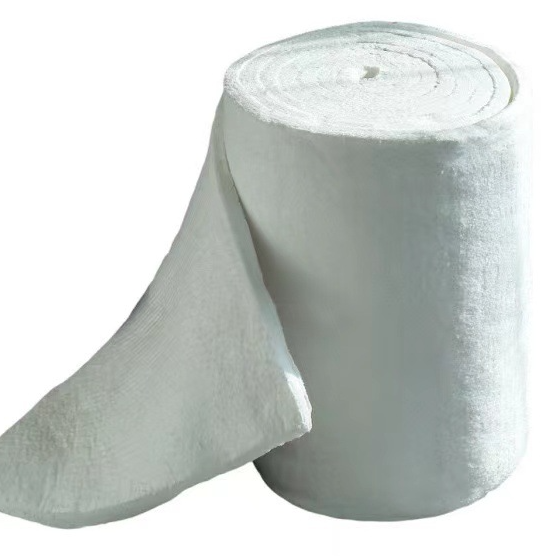
1. For the DN150 steam pipe in the inland river branch pipe gallery installation, the insulation thickness is 100 mm, comprising two layers. The structure, from the inside out, is as follows: steel pipe — a single layer of insulation (ceramic fibre blanket) 50 mm thick — a reflective layer (high-temperature-resistant aluminium foil fibreglass cloth); a second layer of insulation (ceramic fibre blanket) 50 mm thick — a reflective layer (standard aluminium foil fibreglass cloth); an additional layer of high-temperature ceramic fibre blanket insulation, 50 mm thick, shall be applied to the top third of the pipe’s outer circumference — a reflective layer (aluminium foil fibreglass cloth) — colour-coated steel sheet.
2. Steam pipes, as well as petrol, diesel and fuel oil pipes, require thermal insulation; ceramic fibre blankets shall be used as the insulation material, with aluminium sheeting providing external protection for the pipes.
3. Thermal compensation for the pipes shall be achieved through natural compensation or square expansion joints. The thrust exerted by steam pipes on the pipe rack and the stresses in the steam pipes shall be calculated using CAESAR II 5.10 software. Due to vibration, the fixing of petrol, diesel and fuel oil pipes must be taken into account.
Pipeline Materials, Corrosion Protection and Thermal Insulation Measures for On-site and Off-site Process and Thermal Networks
Material pipelines shall be constructed from seamless carbon steel pipes; steam, nitrogen, compressed air and condensate pipelines shall use No. 20 seamless steel pipes; drainage pipelines shall use rigid polyvinyl chloride (PVC) pipes; and water supply pipelines shall use polyethylene (PE) pipes.
All carbon steel pipes shall be coated with anti-rust paint; pipes without thermal insulation shall also be coated with oil-based enamel to prevent atmospheric corrosion. Ceramic fibre blankets shall be used as the thermal insulation material; specific thicknesses for thermal and cryogenic insulation shall comply with relevant design standards.