In industrial furnace applications, ceramic fibre boards are highly favoured for their excellent thermal insulation and refractory properties. However, product quality on the market varies considerably, with a constant stream of low-priced, substandard products, presenting a significant challenge for purchasers. Today, Mu Yi Hui offers you a guide to avoiding pitfalls when purchasing ceramic fibre boards, to help you identify and avoid buying low-priced, substandard products.
I. Understanding the Basic Characteristics of Ceramic Fibre Boards
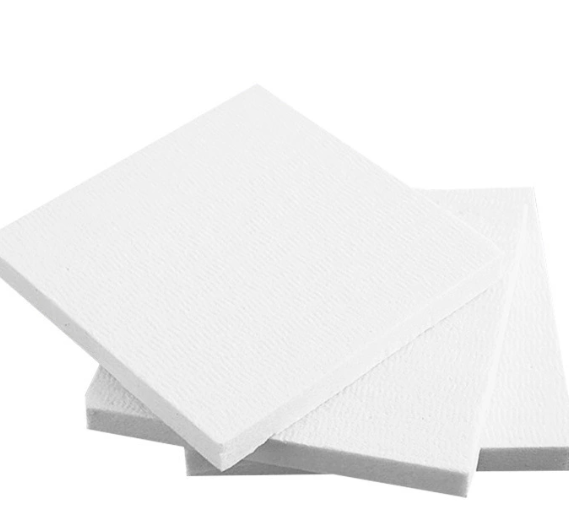
Ceramic fibre boards, also known as aluminium silicate boards or refractory fibre boards, possess excellent properties such as high-temperature resistance, thermal insulation and heat retention. They are typically manufactured using advanced, continuous production lines, resulting in boards with smooth surfaces, precise dimensions, good toughness and the ability to be cut to any size. However, product quality may vary due to differences in production processes and raw materials.
II. Key Indicators for Identifying Low-Priced, Substandard Products
Visual Inspection
Thickness and Density: High-quality ceramic fibre boards should have uniform thickness and moderate density (generally between 280–320 kg/m³). Boards that are too thin or too thick may indicate quality issues.
Surface Condition: The surface should be flat and smooth, free from stains, water marks or adhesive residues. Additionally, check that the edges are dense and solid, and inspect for any fraying, delamination, blistering or carbonisation.
Colour of Cross-Section: The cross-section of high-quality boards should be a uniform beige colour. If the cross-section appears black, green or has black spots, this may indicate that recycled material has been mixed into the product.
Performance Testing
Fire Resistance: Although ceramic fibre boards inherently possess good fire resistance, substandard products may fail to meet the expected fire resistance rating. Therefore, when purchasing, suppliers should be required to provide relevant fire resistance test reports.
Dust Hazards: Substandard ceramic fibre boards may generate significant amounts of dust during production, processing, installation and use, posing a risk to human health. Consequently, products that generate minimal dust should be selected.
Price and Brand
Exercise Caution with Excessively Low Prices: Ceramic fibre boards on the market that are priced excessively low often have quality issues. When purchasing, avoid blindly pursuing the lowest price; instead, consider the product’s performance, quality and price comprehensively.
Choose well-known brands: Well-known brands generally have stricter quality control systems and more comprehensive after-sales service. Therefore, priority should be given to products from well-known brands when procuring.
III. Procurement Recommendations
Clarify requirements: Before procurement, clearly define your requirements and the intended environment of use to ensure you select the appropriate product type and specifications.
Compare multiple options: Do not rush to place an order; instead, compare the product quality, price and service offered by different suppliers.
Sign a contract: When making a purchase, sign a contract with the supplier that clearly sets out the terms regarding product specifications, quantity, price and delivery times. At the same time, request that the supplier specify details such as the warranty period and the brands of ancillary materials in the contract.
Inspect the goods: Upon receipt of the goods, carry out an inspection promptly to ensure that the products comply with the contractual requirements and quality standards. Should any issues be identified, communicate with the supplier promptly to resolve them.