When selecting aluminum silicate insulation boards or ceramic fiber boards, in order to fully leverage the high-temperature thermal insulation properties of ceramic fiber boards, Mu Yi Ceramic Fiber Board Manufacturer—drawing on years of production and sales experience—advises prospective buyers to keep the following points in mind when purchasing and selecting a manufacturer:
1. Temperature resistance range.
Insulation materials are classified by temperature range into low-temperature, medium-temperature, and high-temperature insulation materials. The temperature resistance of the selected insulation material must match the operating environment. The selection of low- and medium-temperature insulation materials falls outside the scope of high-temperature ceramic fiber boards and will not be discussed in detail here. For the high-temperature range of 600–1400, select ceramic fiber boards; for temperatures below 1000, use ordinary ceramic fiber boards; for 1000–1200, use standard ceramic fiber boards; for 1200–1300, use high-alumina ceramic fiber boards; and if the temperature exceeds 1300, choose zirconia-containing ceramic fiber boards.
2. Form characteristics.
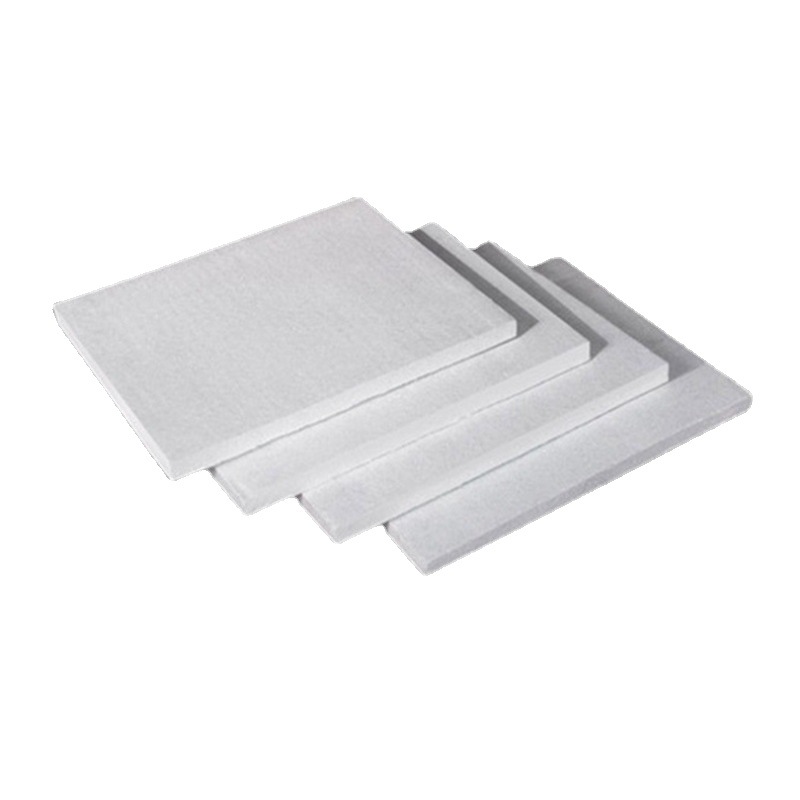
Ceramic fiber insulation materials come in various forms, including boards, blankets, batting, paper, felt, custom-shaped parts, and textiles. Felt and blankets are often confused with ceramic fiber boards. Ceramic fiber blankets are relatively soft materials that can be rolled up. Ceramic fiber felt has a hardness level between that of ceramic fiber boards and ceramic fiber blankets and is currently used less frequently. Ceramic fiber boards are among the hardest types of ceramic fiber insulation materials. There are some differences in the physical properties of various materials. The form and physical properties of the selected insulation material must be suitable for the intended environment.
3. Chemical Properties.
The chemical properties (water resistance, corrosion resistance, etc.) of various insulation materials also differ. The chemical properties of the selected insulation material must be suitable for the intended environment. Ceramic fiber boards are corrosion-resistant but not waterproof.
4. Thermal Insulation and Heat Resistance.
In thermal insulation systems, the thickness of the insulation layer often has an optimal value. The thickness of the insulation layer must not exceed the specified limit. In certain applications requiring a thinner insulation layer, ceramic fiber board—which offers excellent thermal insulation performance—is often the preferred choice.
5. Environmental Protection Rating of Materials.
The environmental protection rating of thermal insulation materials should meet design requirements. Some export products often require the use of insulation materials with a high environmental protection rating. Once material costs are determined, costs are calculated based on material prices, and materials with a good cost-performance ratio are selected. Ceramic fiber boards are an environmentally friendly material that complies with relevant domestic and international environmental protection tests and are eligible for export.