The energy-saving benefits of ceramic fibre boards have been recognised by the market. When used in high-temperature kilns, this product is commonly applied as a backing layer for lightweight refractory bricks. Ceramic fibre boards are typically installed by laying them in successive layers. When employing this method, anchor bolts must be driven through the ceramic fibre boards and secured to the kiln wall. The selection of anchor bolts cannot be generalised. When the internal temperature of the kiln is below 1260°C, 304 or 310 stainless steel may be used; at temperatures above 1260°C, due to the high heat and the risk of carbon deposits damaging the fibres, ceramic anchor bolts should be used. Different industries and kilns require different construction and laying methods.
I. Industrial Furnace Construction
1. Thoroughly clean the surface of the area to be worked on (including its surface).
2. Binder mixing ratio: Mix the binder powder and water glass in a ratio of 1:1.2 until uniform (do not use water).
3. Using a trowel, apply the binder evenly to the surface of the ceramic fibre boards. Press firmly to ensure a tight bond between adjacent panels, both vertically and horizontally, and ensure a secure bond.
II. Manufacturing and Heat Treatment Industries
1. Remove residual dust, grease and other debris, as well as any hollow areas, from the concrete wall surface.
2. Chisel out cracked concrete blocks, inclusions and hollow areas from the ceiling slab, and repair them.
3. The surface flatness of the ceramic fibre boards to be bonded must not deviate by more than 4 mm. Where this tolerance is exceeded, grind down any protruding concrete surfaces and fill in any recessed areas (where the required filling thickness exceeds 6 mm, apply a 1:2.5 cement mortar render; where the required filling thickness is less than 6 mm, use a polymer-modified bonding mortar); this ensures the flatness of the entire wall is within 4 mm, with square internal and external corners and a smooth transition from top to bottom.
4. The mortars used for installation comprise specialised bonding mortar and a high-temperature-resistant adhesive for the facing layer.
5. The weight ratio for mixing the bonding mortar is water:mortar = 1:5. Add water whilst stirring continuously for no less than 5 minutes; the mixture must be thoroughly and evenly blended, with a moderate consistency and sufficient viscosity.
6. Once the mortar has been mixed, it must be left to stand for 5 minutes. It should be stirred again before use, and the mixed mortar must be used within 1 hour.
III. Insulation Boards for Kiln Linings
Most ceramic fibre boards are used as backing insulation boards for kilns. Depending on the required thickness of the backing, two, three or four layers of 50 mm thick ceramic fibre boards may be selected; these simply need to be laid in layers, but care must be taken to ensure protection against moisture, water and oil. Joints may be filled with loose ceramic fibre wool and high-temperature adhesive.
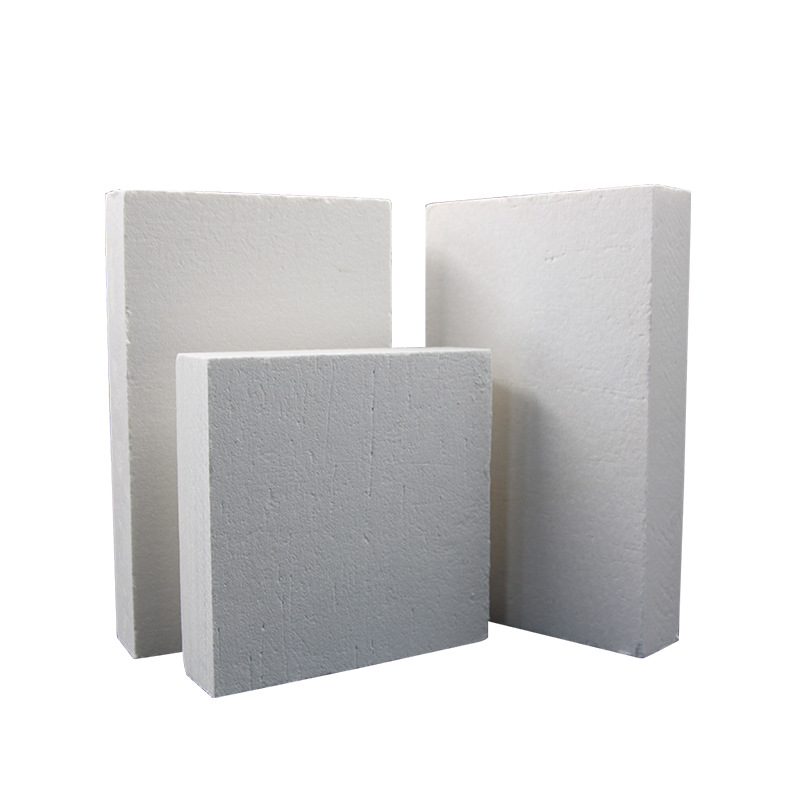
Ceramic fibre boards are a lightweight, high-temperature-resistant and environmentally friendly material. They possess a certain degree of rigidity and load-bearing capacity, though they are not as hard as cement boards. Their primary raw material is ceramic fibre batt; after vacuum moulding, they can be easily cut to the required dimensions.
As the installation procedures for ceramic fibre boards vary across different industries, we recommend consulting our Mu Yi engineers when installing them. Our engineers will recommend different installation and fixing methods based on your specific operating conditions, ensuring that the performance and service life of the ceramic fibre boards are optimised.