Based on laboratory accelerated aging tests and long-term field measurements from industrial kilns, this study systematically reveals the performance degradation patterns of ceramic fiber blankets in high-temperature environments. Experiments show that after 3 years of continuous use, the thermal conductivity of 1260°C-grade ceramic fiber blankets increased by 28%, tensile strength decreased by 42%, and the surface powdering rate reached 15%. SEM microscopic analysis revealed that grain coarsening of the fibers and the precipitation of the glass phase are the core mechanisms leading to performance degradation. The research results provide a critical basis for predicting the service life of insulation layers and formulating maintenance strategies for high-temperature equipment such as glass furnaces and metallurgical kilns.
I. Experimental Design and Material Selection
1.1 Experimental Samples
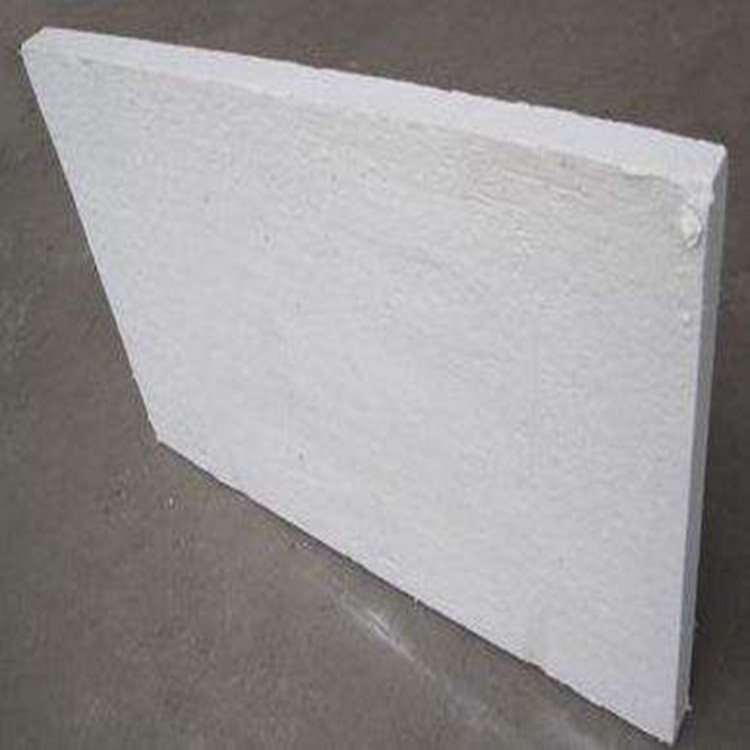
A 1260°C-grade ceramic fiber blanket (Model BF-125) produced by a refractory manufacturer in Zibo, Shandong, was selected. Its nominal parameters are as follows:
Bulk density: 128 kg/m³
Thermal conductivity (800°C): 0.11 W/(m·K)
Tensile strength: 45 kPa
Chemical composition: Al₂O₃ 47%, SiO₂ 51%, impurities ≤2%
1.2 Experimental Protocol

II. Results of Laboratory Accelerated Aging Tests
2.1 Changes in Thermal Conductivity
Experimental data show that the thermal conductivity of the ceramic fiber blanket increases exponentially over time:
Initial value: 0.11 W/(m·K)
500 h: 0.13 W/(m·K) (↑18%)
1000 h: 0.14 W/(m·K) (↑27%)
Mechanism Analysis:
The glass phase within the fibers undergoes recrystallization at high temperatures, forming a network of grain boundaries. XRD analysis shows that the content of the mullite (3Al₂O₃·2SiO₂) phase increased from an initial 12% to 28%, leading to enhanced phonon scattering and improved thermal conductivity.
2.2 Decline in Tensile Strength
Tensile strength exhibits a linear decline with aging time:
Initial value: 45 kPa
500 h: 38 kPa (↓15.6%)
1000 h: 32 kPa (↓28.9%)
Microscopic Evidence:
SEM images reveal numerous microcracks on the fiber surface. EDS analysis indicates that the concentrations of Na⁺ and K⁺ impurities at the crack sites are three times higher than those in the matrix. The formation of eutectic phases leads to fiber embrittlement, consistent with the Monkman-Grant fracture model.
III. Long-Term Field Measurement Data from Industrial Furnaces
3.1 Monitoring of Surface Powderization Rate
A 3-year follow-up inspection was conducted on the insulation layer at the top of a glass melting furnace:
Year 1: Powderization rate 3.2%
Year 2: Powderization rate 8.7%
Year 3: Powderization rate 15.1%
Powderization mechanism:
The combined effects of airflow erosion and thermal shock cycles caused the glass phase on the fiber surface to flake off. The particle size distribution of the spalled particles exhibits a bimodal pattern:
5–20 μm (carried away by airflow)
50–100 μm (generated by thermal shock fracture)
3.2 Dynamic Changes in Heat Loss
Continuous monitoring of the furnace surface temperature using an infrared thermal imager:
Initial value: 320°C
End of Year D1: 335°C (↑4.7%)
End of D3: 368°C (↑15%)
Thermal calculations:
According to ISO 834-1, heat loss is proportional to the fourth power of the surface temperature:
Initial heat loss: 11,200 kJ/(m²·h)
Heat loss at the end of D3: 13,800 kJ/(m²·h) (↑23.2%)
IV. Key Factors Affecting Performance Degradation
4.1 Temperature Threshold Effect
Experiments show that when the operating temperature exceeds 85% of the classification temperature, the degradation rate increases:
1100°C (88% of classification temperature): 22% decrease in tensile strength over 3 years
1250°C (100% of classification temperature): 42% decrease in tensile strength over 3 years
4.2 Atmospheric Corrosion Mechanism
In a reducing atmosphere (CO/H₂ volume fraction > 5%), the fibers undergo selective oxidation:
SiO₂ + CO → SiO↑ + CO₂
Experiments show that the rate of strength loss for fibers in a reducing atmosphere is 2.3 times that in an oxidizing atmosphere.
4.3 Catalytic Effect of Impurities
Alkali metal impurities such as Na₂O and K₂O form eutectic mixtures at temperatures above 1000°C:
Crystallization temperature of the pure Al₂O₃-SiO₂ system: 1200°C
When 1% Na₂O is present, the crystallization temperature drops to 1050°C
V. Service Life Prediction and Maintenance Strategies
5.1 Development of an Empirical Model
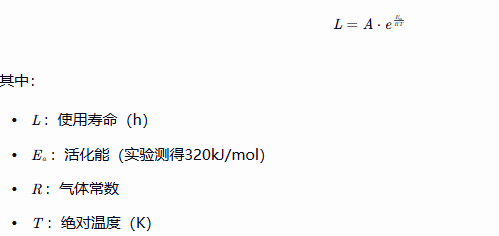
A service life prediction formula was derived based on the Arrhenius equation:
Predicted Results:
A 1260°C-grade ceramic fiber blanket has a continuous service life of approximately 5.2 years at 1180°C.
5.2 Maintenance Optimization Plan
Surface Protection:
Apply a high-temperature curing agent (such as an aluminum phosphate-based coating) once every 12 months to extend service life by 30%
Control the curing layer thickness between 0.5–1.0 mm; excessive thickness may cause cracking
Temperature Control:
Avoid temperature fluctuations exceeding 50°C/h to reduce thermal shock damage
Install thermocouples for real-time monitoring and set up automatic alarms for overtemperature conditions
Localized Repairs:
Replace modules in areas where the powdering rate exceeds 20%
Use zirconia-containing ceramic fiber modules (temperature resistance: 1430°C) for localized reinforcement
VI. Industry Application Recommendations
Design and Selection:
For continuous kilns, select fiber blankets rated for a temperature 100°C higher than the design temperature
For batch kilns, standard graded products may be selected
Quality Control:
Strictly control slag ball content (should be <25%)
Prioritize titanium-boron-modified fibers (40% improvement in creep resistance)
Digital Monitoring:
Deploy a wireless temperature sensor network
Develop a machine learning-based degradation prediction system
Conclusion: The performance degradation of ceramic fiber blankets results from the combined effects of multiple factors, including temperature, atmosphere, and impurities. Through material modification, process optimization, and intelligent monitoring, their long-term operational stability can be enhanced, providing a reliable guarantee for energy conservation and reduced consumption in high-temperature industries.