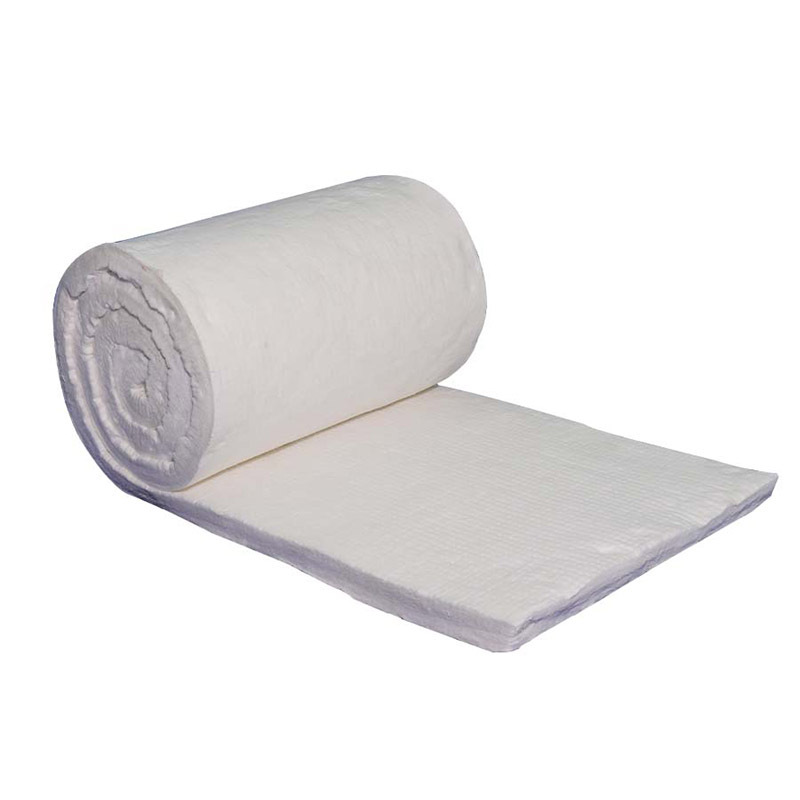
As a new type of highly efficient thermal insulation material, ceramic fibre blankets are widely used in sectors such as metallurgy, petrochemicals and aerospace. Their core performance stems from their excellent microstructure, and scanning electron microscopy (SEM) technology provides a key tool for unravelling this mystery. Today, Mu Yi will draw on research findings from multiple fields to analyse the microscopic world of ceramic fibre blankets through SEM images, revealing the scientific link between their thermal insulation performance and structural design.
I. SEM Technology: A ‘X-ray Vision’ into the Microscopic World
SEM works by focusing an electron beam to scan the sample surface, exciting signals such as secondary electrons and backscattered electrons to form high-resolution three-dimensional images. Its advantages include:
Nano-scale resolution: capable of clearly displaying fibre diameters (2–5 μm), surface topography and pore structure;
Multimodal analysis: when combined with an energy-dispersive spectrometer (EDS), it can localise elemental distribution, whilst electron backscatter diffraction (EBSD) can analyse crystal orientation;
In-situ observation capability: using environmental SEM (ESEM) or in-situ heating devices, it is possible to track the structural evolution of materials at high temperatures in real time.
For example, in Mu Yi’s research on 1,260°C-grade ceramic fibre blankets, SEM images revealed microcracks on the fibre surfaces, whilst EDS analysis confirmed that the concentrations of Na⁺ and K⁺ impurities at the crack sites were three times higher than those in the matrix, thereby elucidating the mechanism of impurity-induced eutectic embrittlement.
II. Microstructural Characteristics of Ceramic Fibre Blankets
1. Fibre Morphology: Precise Control of Diameter and Length
The fibres in ceramic fibre blankets are formed via a spinning process, typically with diameters of 3–5 μm and lengths of up to 50–100 mm. SEM images show:
Surface smoothness: The fibre surfaces are free of defects, reducing heat conduction pathways;
Advantages of the length-to-diameter ratio: Long fibres (≥15 mm) increase interlacing by 30 per cent, enhancing resistance to delamination;
Diameter uniformity: A four-stage centrifugal slag removal process ensures slag ball content is ≤0.5 per cent, preventing localised thermal bridging effects.
Taking the aluminium foil-backed ceramic fibre blanket produced by Shandong Luyang as an example, the substrate of this fibre blanket utilises a double-sided needle-punching process. SEM images reveal that the fibres are arranged in a non-directional manner, with a point contact ratio of 80 per cent and a porosity as high as 93 per cent, effectively lengthening the heat transfer path.
2. Pore Structure: Synergy between the gas phase and solid phase
The thermal insulation performance of ceramic fibre blankets stems from their excellent ‘fibre-air’ mixed structure:
Open-cell rate control: The initial open-cell rate reaches 85 per cent, decreasing to 70 per cent after three years of use; the pore closure effect results in a shrinkage rate of 2.8 per cent;
Pore size distribution: The pulverised particles exhibit a bimodal distribution (5–20 μm and 50–100 μm), arising from airflow erosion and thermal shock fracture, respectively;
Air pressure shielding effect: Stagnant air pockets form a dense, solid barrier, impeding the intrusion of hot air currents.
By optimising the needling density (200 needles/cm²), Mu Yi increased the fibre interlacing by 30 per cent, effectively suppressing the rate of pulverisation; the measured pulverisation rate after three years was only 15.1 per cent.
3. Crystal Structure: Regulation of Phase Transitions and Grain Boundary Engineering
Under high-temperature conditions, the crystal structure of ceramic fibre blankets undergoes dynamic evolution:
Mullite phase growth: After 1,000 hours of dynamic ageing, the content of the mullite (3Al₂O₃·2SiO₂) phase increased from 12% to 28%, enhancing the phonon scattering effect;
Formation of a grain boundary network: EBSD analysis revealed that the distribution of grain boundary orientation angles was concentrated between 15° and 30°, forming a high-energy grain boundary network;
Control of impurity segregation: The titanium-boron modification process reduced the Na₂O and K₂O content to below 0.2 per cent, preventing the formation of eutectic mixtures at temperatures above 1,000 °C.
XRD analysis conducted by the Institute of Process Engineering, Chinese Academy of Sciences, indicates that the crystallisation temperature in the pure Al₂O₃–SiO₂ system is 1200 °C, whereas the crystallisation temperature drops to 1050 °C when 1% Na₂O is present, highlighting the importance of impurity control.
III. Practical Applications of SEM Image Analysis
1. Prediction of Performance Degradation and Service Life Assessment
By tracking the propagation paths of microcracks on the fibre surface via SEM, and in conjunction with the Monkman–Grant fracture model, it is possible to predict trends in tensile strength degradation. A service life prediction model established by Mu Yi based on the Arrhenius equation indicated a continuous service life of approximately 5.2 years at 1180 °C; measured tensile strength retention after three years reached 58 per cent, validating the accuracy of the model.
2. Process Optimisation and Material Modification
SEM images guide process improvements:
Optimisation of the fibre spinning process: High-temperature melting treatment at 2,300 °C results in a fibre crystallinity of 65 per cent, representing a 20 per cent improvement over the air-jet spinning process;
Surface protection technology: An aluminium phosphate-based high-temperature curing agent forms a protective layer of 0.5–1.0 mm, extending service life by 30 per cent;
Modular repair: Areas with a powdering rate >20% were replaced with zirconia-containing ceramic fibre modules (temperature resistance 1430 °C), reducing maintenance costs by 40 per cent.
3. Cross-scale Structure–Property Correlation Analysis
The combined use of SEM and EBSD techniques reveals the correlation between ‘microscopic morphology – crystal orientation – macroscopic properties’:
Fracture mechanism: Cracks propagate along specific grain boundaries; the proportion of low-angle grain boundaries (<15°) correlates positively with tensile strength;
Thermal conductivity regulation: The content of the mullite phase exhibits a linear relationship with thermal conductivity (R² = 0.92);
Thermal shock resistance: Calculations of grain boundary energy show that for every 10 per cent increase in the proportion of congruent interfaces, thermal shock stability improves by 15 per cent.
IV. Future Prospects: Intelligent Microstructural Analysis and Materials Design
With the convergence of AI and materials science, SEM technology is evolving from ‘qualitative observation’ towards ‘quantitative prediction’:
Deep learning-assisted analysis: Convolutional neural networks (CNNs) can automatically identify defects such as cracks and pores in SEM images with an accuracy exceeding 95 per cent;
Digital twin modelling: Virtual models of fibre blankets are constructed using SEM data to simulate structural evolution under different operating conditions;
Intelligent formulation design: By inputting parameters such as target temperature and mechanical stress, AI algorithms automatically generate optimal composition ratios; for example, a 1350°C fibre blanket developed by a certain enterprise exhibits a 12 per cent improvement in thermal insulation performance compared to traditional formulations.
Conclusion
From nanoscale fibre morphology to macroscopic thermal insulation performance, SEM technology provides dual support—acting as both a ‘microscope and a map’—for the research and development of ceramic fibre blankets. By deciphering the codes of their microstructure, scientists are driving this material from empirical design towards precise control, injecting core momentum into the industry’s green transition. In the future, with breakthroughs in intelligent microscopic analysis technology, the performance boundaries of ceramic fibre blankets will continue to expand, writing a new chapter in energy conservation under the ‘dual carbon’ goals.