In the modern industrial sector, the issue of thermal insulation for high-temperature equipment has always been a key focus for engineers. In order to enhance the high-temperature resistance of materials, scientists have been constantly exploring and innovating, and the combination of ceramic fibre blankets coated with aluminium foil is an outstanding achievement resulting from this exploration. Today, Mu Yi will delve into the secret behind how this combination improves high-temperature resistance by 50 per cent.
Ceramic Fibre Blanket: The Cornerstone of High-Temperature Resistance
Ceramic fibre blanket, also known as alumina-silica fibre blanket, is a high-performance thermal insulation material. It is primarily composed of high-temperature-resistant components such as aluminium oxide and silicon dioxide. The fibres are produced through a continuous melting and spinning process in a furnace-less, water-cooled wall resistance furnace, and are subsequently formed by double-sided needle-punching. This specialised production process endows ceramic fibre blankets with advantages such as long fibres, a coarse and uniform diameter, high tensile strength, strong resistance to airflow erosion, and excellent thermal stability.
Ceramic fibre blankets have a wide temperature resistance range, generally reaching 950–1,400 °C; in certain specific cases, such as needled aluminium silicate insulation blankets, their high-temperature resistance can even reach 1,260 °C. This excellent high-temperature resistance gives ceramic fibre blankets broad application prospects in the field of high-temperature thermal insulation.
Aluminium Foil: The Ideal Partner for Thermal Insulation
Aluminium foil, as a thin and lightweight metallic material, possesses an excellent silvery-white lustre, high thermal and electrical conductivity, high moisture resistance, and is odourless, non-toxic and highly corrosion-resistant. Combining aluminium foil with ceramic fibre blankets not only enhances the structural properties of the material but also improves its high-temperature resistance.
The density of the aluminium foil directly impedes gas convection, thereby reducing heat loss. At the same time, the high thermal reflectivity of the aluminium foil effectively reflects heat, further reducing heat transfer. This excellent thermal insulation mechanism enhances the high-temperature resistance of the ceramic fibre blanket once it is coated with aluminium foil.
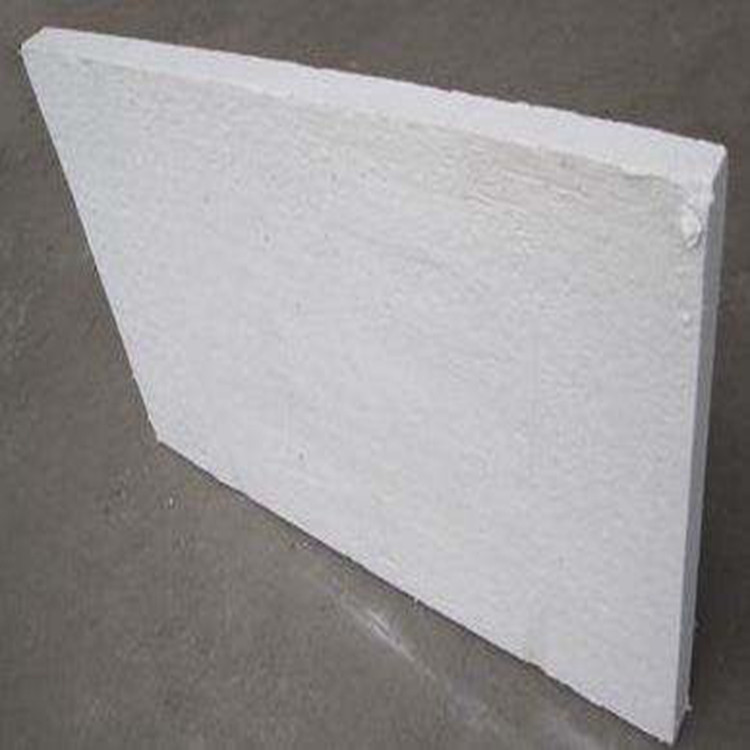
The Secret of the Composite Structure
When a ceramic fibre blanket is coated with aluminium foil, an excellent composite structure is formed. Through the combined action of the ceramic fibre blanket’s porosity and the aluminium foil’s density, this structure effectively reduces the three modes of heat transfer—conduction, convection and radiation—thereby minimising heat loss. Specifically, the ceramic fibre blanket has a very high porosity; the gas is divided by the fibres into small, virtually stationary air pockets. The pressure within these air pockets, together with the solid fibres, forms a dense, solid barrier that prevents the intrusion of hot air currents. Meanwhile, the aluminium foil, through its density and high thermal reflectivity, further reduces heat transfer and loss.
Experimental data show that, compared with a ceramic fibre blanket alone, the high-temperature resistance of a ceramic fibre blanket coated with aluminium foil is improved by approximately 50 per cent. This improvement is attributable not only to the thermal insulation properties of the aluminium foil, but also to the excellent composite structure formed between the ceramic fibre blanket and the aluminium foil.
Broad Application Prospects
Thanks to its outstanding high-temperature resistance and excellent thermal insulation properties, this composite material—consisting of a ceramic fibre blanket coated with aluminium foil—holds broad application prospects in high-temperature industrial sectors such as metallurgy, petrochemicals, power generation and ceramics. It can be utilised in scenarios including thermal insulation and refractory materials for high-temperature kilns, thermal insulation for high-temperature pipelines, and thermal insulation and fire protection for electrical components, thereby effectively conserving heat, reducing energy consumption and enhancing the safety and stability of equipment.
Conclusion
This innovative combination of ceramic fibre blankets coated with aluminium foil has achieved a significant improvement in high-temperature resistance through its excellent composite structure and superior material properties. This achievement not only provides an effective solution to thermal insulation challenges in high-temperature industrial sectors but also injects new vitality into the development of materials science. In the future, with continuous technological progress and the expansion of applications, this composite material—ceramic fibre blankets coated with aluminium foil—is bound to play a significant role in an ever-wider range of fields.