Cold-rolled bell-type furnaces operate at temperatures of 650–1000 °C. Fueled by light oil, gas or electricity, the furnace maintains a reducing atmosphere. Bell-type furnaces are primarily used for bright annealing of workpieces, as well as for general heat treatment. Bell-type resistance furnaces, on the other hand, are mainly employed for high-temperature heat treatment. Bell-type furnaces are intermittent, variable-temperature furnaces; the furnace chamber is heated as a single unit, with the temperature varying over time according to a specified heating profile.
Given that bell-type furnaces typically use gas or light oil as fuel, maintain a reducing atmosphere inside the furnace, and operate at temperatures below 1,000 °C, the working layer of the wall lining is usually made of high-alumina ceramic fibre products, whilst the backing layer may utilise high-purity or standard ceramic fibre products. Depending on specific operating conditions, the recommended thickness of the wall lining ranges from 250 to 380 mm.
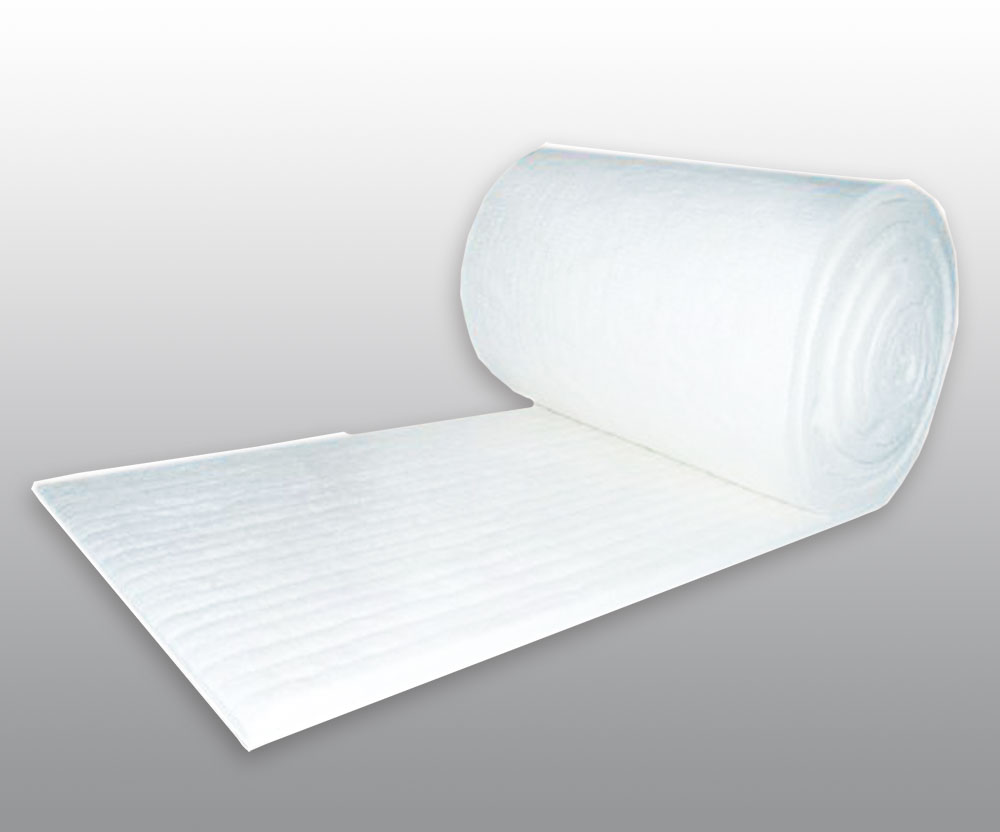
1. Upper sections of the furnace walls and the furnace roof:
a) Layered ceramic fibre lining (suitable for furnace temperatures below 800 °C)
Ceramic fibre blankets are laid in layers, typically requiring 6 to 9 layers. These are secured using heat-resistant stainless steel bolts and quick-release clips. Where furnace temperatures are high, ceramic anchoring components must be used for fixation.
b) Layered and stacked composite lining (used for furnace temperatures between 700°C and 1100°C)
When using a composite lining consisting of flat-laid ceramic fibre blankets and ceramic fibre module assemblies, generally two or more layers of ceramic fibre blankets are laid flat as a backing, with a thickness of 30–100 mm. The thickness of the ceramic fibre modules is generally 200–250 mm.
2. Burner area at the base of the furnace hood
As this area is subject to frequent vibrations and impacts from hoisting operations, as well as high-velocity gas flow erosion from the burners, the lining should consist of ceramic fibre boards, ceramic fibre blankets or fibre castables. Currently, fibre castables are being used increasingly widely due to their advantages, including rapid installation, high compressive strength of the lining and excellent resistance to wind erosion.
Composite lining structure combining flat-laid ceramic fibre blankets with ceramic fibre modules: The anchoring configuration of ceramic fibre modules is generally of the herringbone or angle-iron type for furnace walls, whilst single-hole suspension is commonly used for furnace roofs.