Flat-laid blankets are frequently used in tunnel kilns, drying kilns and mesh-belt kilns. When people hear the term ‘flat-laid blanket’, most are left wondering: what exactly is a flat-laid blanket? And what is it used for? In fact, a flat-laid blanket is simply the ceramic fibre blanket we commonly use, which is frequently employed in furnace linings. A single layer is generally used in conjunction with ceramic fibre modules to level the surface and enhance the sealing and thermal insulation effects, whilst multiple layers are laid flat on top of one another to form the thermal insulation layer of the furnace lining.
The flat-lay structure of ceramic fibre blankets typically employs steel plates with welded anchor studs; the blankets are secured to the furnace wall layer by layer by threading them through the studs, and a stainless steel mesh is laid over the top to prevent them from falling. However, the manual installation of multi-layer composite ceramic fibre blankets presents a certain degree of difficulty.
If more than three materials are involved, manual installation becomes even more challenging; firstly, it is difficult to guarantee the quality of the work, and secondly, the multi-layer composite structure lacks sufficient integrity.
Therefore, the method of laying ceramic fibre blankets as a backing layer, followed by the installation of ceramic fibre modules, results in a more robust structure. The pre-compressed elastic design compensates for the natural shrinkage of the fibres, enhancing the furnace lining’s seal. This approach also ensures better overall flatness and aesthetic appeal. Furthermore, the application of a curing agent to the working surface prevents slag fallout whilst extending the service life of the furnace lining.
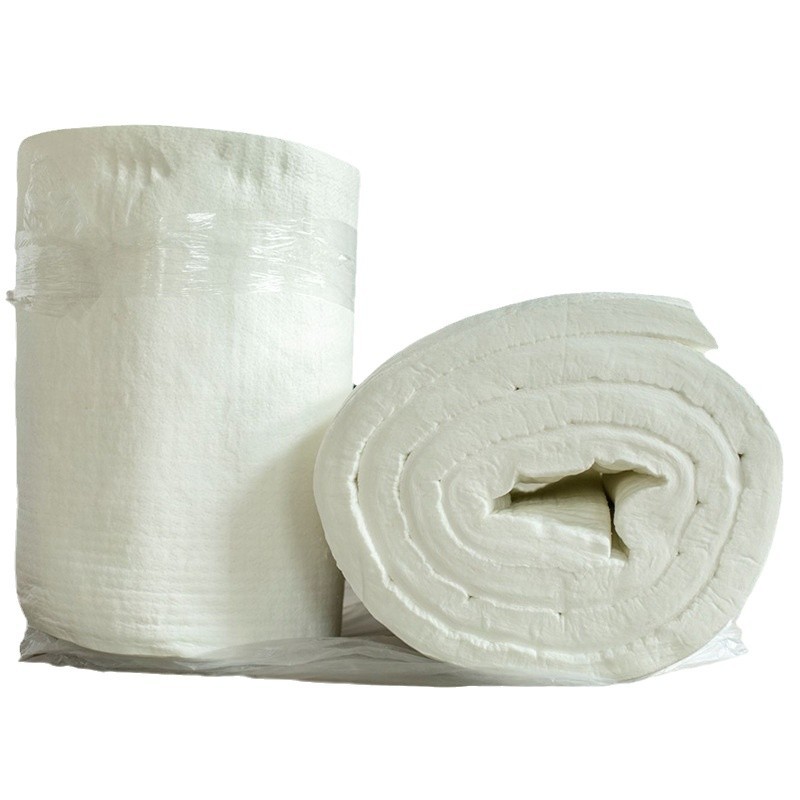
The structural advantages of the ceramic fibre module plus flat-laid ceramic fibre blanket system are as follows:
1. Reduced fuel consumption and increased output.
2. Lower surface temperature of the furnace body.
3. Extended furnace service life.
4. Reduced combustion losses.
When lining industrial furnaces with a fully ceramic fibre lining, one should not simply opt for a single type of insulation material or a composite insulation material. Instead, different ceramic fibre materials must be selected for each layer based on the principle of temperature gradient reduction within the lining. This can be achieved through the flexible use of various materials, such as single or composite ceramic fibre blankets, ceramic fibre boards, and other ceramic fibre products. Only in this way can a solution be achieved that is both economically sound and effective in reducing costs.