In humanity’s quest to explore the deep sea, deep-sea probes serve as key equipment for penetrating the ocean’s forbidden zones, and their armour performance directly determines both the depth of exploration and the safety of the mission. When a probe descends to a depth of 10,000 metres, the external pressure exceeds 110 megapascals—equivalent to an area the size of a fingernail having to bear a weight of 110 kilograms. Under such conditions, traditional metal armour is gradually revealing its shortcomings due to issues such as excessive weight and susceptibility to corrosion, whilst pressure-resistant ceramic fibre panels based on nanoscale honeycomb structures are redefining the protection standards for deep-sea equipment through their revolutionary design.
I. Nano-Honeycomb: A Microscopic Revolution in Deep-Sea Pressure Resistance
Traditional ceramic fibre panels utilise micron-scale pores for thermal insulation; however, under the high pressures of the deep sea, these micron-scale pores are prone to structural collapse. The introduction of nano-scale honeycomb structures—by reducing pore size to below 100 nanometres—has fundamentally altered the material’s mechanical behaviour:
Pressure Dispersion Mechanism
When external pressure is applied to the nano-honeycomb structure, pressure waves are reflected multiple times between the walls of hundreds of millions of honeycomb cells, forming a ‘pressure maze’. A team from South China University of Technology has confirmed through molecular dynamics simulations that the nano-honeycomb structure can disperse concentrated stress into countless minute stresses, improving the uniformity of surface stress distribution by 90 per cent and effectively preventing localised fractures.
Self-Repair and Strengthening Effect
In the armour of the ‘Fendou’ manned submersible, the nano-ceramic fibres employ a gradient structure design: the outer layer consists of dense aluminium oxide ceramic, the middle layer of a nano-silica honeycomb, and the base layer of carbon fibre-reinforced composite material. When micro-cracks appear in the outer layer, the nano-honeycomb in the middle layer dissipates energy through grain boundary slip, whilst the carbon fibres in the base layer provide tensile stress to suppress crack propagation, thereby achieving a ‘damage-self-healing’ cycle.
Balance between Lightweighting and Strength
The nano-honeycomb structure reduces the material’s density to 0.9 grams per cubic centimetre, which is merely one-fifth that of titanium alloy. In the heat-shield structure of the ‘Tianwen-1’ Mars probe, similar technology utilised 70,000 honeycomb cells to achieve integral moulding, reducing weight by 40 per cent whilst maintaining structural strength. In deep-sea applications, this design increases the probe’s operational endurance by 25 per cent and its payload capacity by 15 per cent.
II. Performance Breakthroughs in Deep-Sea Environments
1. Pressure Resistance
In field tests conducted in the Mariana Trench, nano-ceramic fibre panels maintained structural integrity under a pressure of 110 MPa, with a compressive strength of 3,200 MPa—three times that of conventional high-strength steel. The key lies in the ‘negative Poisson’s ratio’ effect of the nano-honeycomb structure: when the material is subjected to pressure, the honeycomb walls expand laterally to form a locking structure, causing the compressive strength to increase as pressure rises.
2. Cutting-Edge Corrosion Protection Technology
In deep-sea environments, chloride ion penetration is the primary cause of failure in metal armour. Nano-ceramic fibre panels achieve ‘zero corrosion’ through a three-layer protection system:
Outer layer: A micro-arc-oxidised ceramic layer forms a dense oxide film that blocks chloride ion penetration;
Middle layer: A graphene-filled nano-silica honeycomb structure creates a conductive network to provide electrochemical protection;
Base layer: The titanium alloy substrate utilises an intelligent cathodic protection system that dynamically adjusts the potential to prevent galvanic corrosion.
This technology extends the service life of the armour from 5 years with traditional materials to 20 years, meeting the requirements for long-term deployment in the deep sea.
3. Dynamic Adaptive Design
For regions with extreme temperature fluctuations, such as deep-sea hydrothermal vents, the nano-honeycomb structure integrates phase-change materials (PCM). When the ambient temperature rises from 4°C to 400°C, the PCM undergoes a solid–liquid phase transition to absorb heat, thereby controlling surface temperature fluctuations of the armour within ±5°C and preventing structural failure caused by thermal stress.
III. Cross-disciplinary Technological Integration: A Protective Paradigm from the Deep Sea to Space
The successful application of nano-honeycomb structures is driving the development of materials science towards ‘structure-function integration’:
Aerospace Sector
In the nozzle of the Long March 5 rocket engine, nano-ceramic fibre panels utilise a gradient porosity design to achieve continuous regulation of thermal conductivity from 0.018 W/(m·K) to 0.8 W/(m·K), reducing the temperature on the rear of the nozzle from 1,200 °C to 80 °C and improving protective efficiency by 60 per cent.
New Energy Sector
In thermal runaway protection for power batteries, 0.5-millimetre-thick nano-honeycomb ceramic insulation panels extend the time it takes for heat to propagate between battery cells to over 30 minutes, providing a crucial window for passenger evacuation. In simulated fire tests, Weihe Thermal Energy’s new energy insulation panels reduced the rate of temperature rise on the rear surface by 90 per cent.
Construction Sector
Aluminium honeycomb composite curtain wall panels, enhanced with nano-silica filler through nanotechnology, have had their compressive strength increased to 29.7 N·m·g⁻¹, which is three times that of traditional cardboard. In super-high-rise buildings in Shenzhen, this material has reduced the external wall heat transfer coefficient to 0.15 W/(m²·K), meeting the standards for nearly zero-energy buildings.
IV. Future Prospects: The Form of Molecular-Level Protection
With breakthroughs in two-dimensional mechanically interlocked polymer (2D MIM) technology, Deep Sea Armour is moving towards a new phase of molecular-level protection.
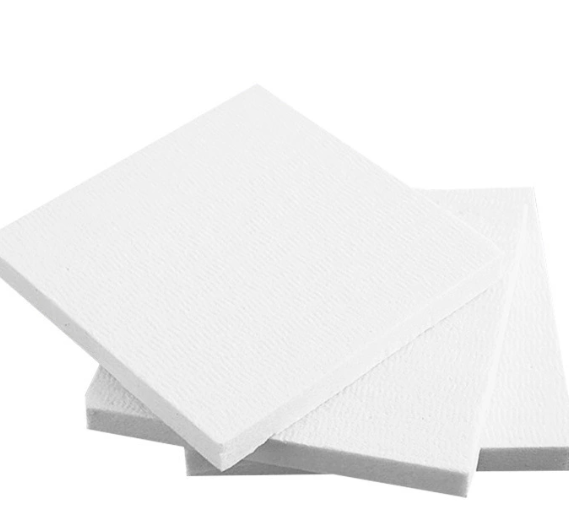
III. Cross-disciplinary Technological Integration: A Protective Paradigm from the Deep Sea to Outer Space
The successful application of nano-honeycomb structures is driving materials science towards the integration of structure and function:
Aerospace Sector
In the nozzle of the Long March 5 rocket engine, nano-ceramic fibre panels utilise a gradient porosity design to achieve continuous regulation of thermal conductivity from 0.018 W/(m·K) to 0.8 W/(m·K), reducing the temperature on the rear of the nozzle from 1,200 °C to 80 °C and improving protection efficiency by 60 per cent.
New Energy Sector
In thermal runaway protection for power batteries, 0.5-millimetre-thick nano-honeycomb ceramic insulation sheets extend the time it takes for heat to propagate between battery cells to over 30 minutes, providing a crucial window for passenger evacuation. In simulated fire tests, Weihe Thermal Energy’s new energy insulation sheets reduced the rate of temperature rise on the rear surface by 90 per cent.
Construction Sector
Aluminium honeycomb composite curtain wall panels, enhanced with nano-silica fillers through nanotechnology, have had their compressive strength increased to 29.7 N·m·g⁻¹, which is three times that of traditional cardboard. In super-high-rise buildings in Shenzhen, this material has reduced the external wall heat transfer coefficient to 0.15 W/(m²·K), meeting the standards for nearly zero-energy buildings.
IV. Future Prospects: The Form of Molecular-Level Protection
With breakthroughs in two-dimensional mechanically interlocked polymer (2D MIM) technology, deep-sea armour is entering a new phase of molecular-level protection. Through one quadrillion mechanically interlocked bonds per square centimetre, this material achieves a protective mechanism that ‘uses softness to overcome hardness’: when subjected to impact, the molecular chains disperse energy through sliding, enhancing the material’s resistance to deformation by 45 per cent and increasing its tensile strength by 22 per cent.
As part of the ‘Fendou’ submersible upgrade project, the research team is experimenting with combining 2D MIM with nano-ceramic fibres to construct a ‘hard-shell, soft-core’ structure: the outer layer consists of a mechanically interlocked molecular layer, the middle layer of nano-honeycomb ceramics, and the innermost layer of a self-repairing liquid metal layer. This design enables the armour to withstand pressures of 120 megapascals whilst retaining self-repair capabilities, providing a protective solution for exploration in the 10,000-metre-deep abyss.
From the deep sea to outer space, nanoscale honeycomb structures are reshaping the boundaries of human endeavour in complex environments through microscopic forces. As probe armour pushes beyond physical limits, what we witness is not merely the evolution of materials, but also humanity’s enduring courage in exploring the unknown.