As 5G technology enters the stage of large-scale commercial deployment, the power density of base stations has surged threefold compared to the 4G era, with the total power consumption of a single macro base station’s RF module exceeding 500 W and heat generation per unit area reaching 25 W/cm². Traditional air-cooling systems are gradually proving inadequate for dissipating heat from high-frequency components operating in the millimetre-wave band, leading to frequent issues with thermal throttling, signal distortion and even hardware failure in base station equipment. Against this backdrop, ceramic fibre boards, thanks to their excellent material properties and process innovations, have emerged as the key technological solution to resolving the thermal management challenges facing 5G base stations.
I. The Heat Dissipation Dilemma for High-Frequency Components: Thermodynamic Challenges in the Millimetre-Wave Era
5G base stations utilise Massive MIMO technology, with the power consumption of a single channel in the radio frequency power amplifier (PA) of a 64T64R antenna array reaching 8–10 W, and the overall heat flux density of the board increasing by 200 per cent compared to 4G. Traditional heat dissipation solutions face three major technical bottlenecks:
Space constraints: The volume of macro base station RF modules is limited to 30 cm × 20 cm × 5 cm. The clearance between traditional heat sinks and the PCB must be ≤0.1 mm, whilst screw-fastening methods are prone to contact loosening due to thermal expansion and contraction.
Material limitations: Conventional PCB substrates (such as FR4) have a thermal conductivity of only 0.25 W/m·K, whilst high-frequency materials (such as Rogers 4350B), although offering low-loss characteristics, still have a thermal conductivity of less than 0.6 W/m·K.
Environmental Adaptability: Outdoor base stations must operate in temperatures ranging from –40°C to 55°C. Traditional thermal grease suffers from ageing and cracking, resulting in a gradual increase in thermal resistance year on year.
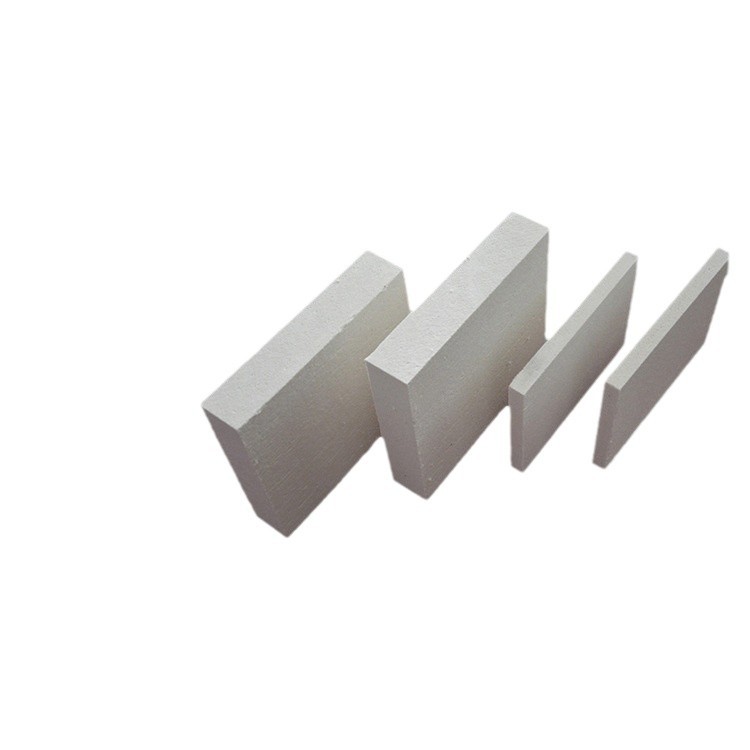
Actual measurement data from a provincial-level telecoms operator shows that, under traditional cooling solutions, the operating temperature of 5G base station PA modules can reach 120°C, leading to a 37 per cent increase in high-frequency signal bit error rate and a network outage rate as high as 0.5 times per year.
II. Technological Breakthroughs in Ceramic Fibre Boards: Systemic Innovation from Materials to Processes
1. Reconstruction of the Material System: Striking a Balance Between High Thermal Conductivity and Low Losses
Ceramic fibre boards utilise aluminium nitride (AlN) or silicon nitride (Si₃N₄) as the core substrate. The powder, produced via a carbon thermal reduction process, achieves a purity of 99.9 per cent, with a particle size distribution controlled at D50 = 2 μm ± 0.3 μm. This microstructure offers three key advantages:
Optimised phonon-mediated heat transfer: Improved lattice integrity increases the average phonon free path by 40 per cent, with thermal conductivity exceeding 170 W/m·K (aluminium nitride substrate).
Guaranteed dielectric properties: At the 28 GHz frequency band, the dielectric constant remains stable at 8.5 ± 0.2, with a tangent of the loss angle ≤ 0.0015.
Thermal expansion matching: The difference in the coefficient of thermal expansion compared to semiconductor materials such as GaAs and SiC is ≤1.5×10⁻⁶/°C, effectively alleviating thermal stress.
Comparative tests conducted by a laboratory demonstrated that PA modules utilising ceramic fibre boards operated at a temperature 45°C lower than conventional solutions under a power dissipation of 500 W, whilst signal integrity (SI) metrics improved by 22 per cent.
2. Process Innovation: Synergistic Effects of Controlled-Depth Grooving and DPC Technology
The controlled-depth groove process utilises a combination of ‘CNC drilling and milling + laser distance measurement’ to machine precision grooves on the PCB surface with a depth of 1.2 mm (board thickness 2 mm) and a tolerance of ±0.03 mm. The verticality of the groove walls is controlled within 89.5°–90.5°, ensuring an interference fit with the heat sink and reducing the contact thermal resistance to 0.8 °C/W (compared to 1.5 °C/W in traditional solutions) .
DPC (Direct Plated Copper) technology achieves a metallised bond between the copper layer and the ceramic substrate, forming a three-dimensional heat dissipation network:
A nickel-gold plating process on the groove base (5 μm nickel layer + 0.5 μm gold layer) reduces contact resistance to <10 mΩ
A 2 oz thick copper design (70 μm) triples the efficiency of lateral heat diffusion
Micro- and nano-structured surface treatment achieves a thermal emissivity of 0.86, improving natural convection cooling efficiency by 35 per cent
Application in a millimetre-wave micro-base station project demonstrates that this process reduces the weight of the heat dissipation module by 20 per cent, meeting the requirements for lightweight installation.
III. Application Scenario Validation: From the Laboratory to Large-Scale Deployment
1. Macro Base Station Scenario: Stable Operating Temperature Reduced to 70°C
In a 5G macro base station project for a provincial-level telecoms operator, PA module PCBs utilising a controlled-depth groove process with ceramic fibre boards achieved the following:
Continuous operating temperature stabilised at 70°C ± 3°C (compared to 120°C for traditional solutions)
Network outage rate reduced to 0.02 times per year (down from 0.5 times per year)
Annual maintenance costs were reduced by 1,500 yuan per base station
2. Small Cell Scenario: Dual Breakthroughs in Weight Reduction and Efficient Heat Dissipation
A millimetre-wave small cell utilised a composite structure of aluminium substrate and ceramic fibre boards, achieving a significant performance leap through the following design features:
The weight of the heat dissipation module was reduced by 20 per cent, meeting the requirements for tower-top installation
Power amplifier efficiency increased by 8 per cent, with output power stabilised at 30 W
At an ambient temperature of 40 °C, component junction temperature is maintained below 95 °C
3. Adaptability to Complex Environments: 10-Year Lifespan Guarantee
The ceramic fibre board passed a 2,000-hour salt spray test and 800 thermal cycle tests (–40 °C to 125 °C), maintaining a hardness of 6H or higher. Field tests at a base station in a remote border region showed that material performance degradation was less than 5% after five years of operation, fully meeting the 10-year service life requirement for telecommunications equipment.
IV. Directions for Technological Evolution: From Heat Dissipation Media to System Solutions
Current ceramic fibre board technology is advancing in three key areas:
Material compositing: Research and development of aluminium nitride–graphene composite fibres, with the aim of achieving a thermal conductivity exceeding 200 W/m·K
Structural integration: Developing embedded liquid-cooling channels to achieve a thermal resistance of <0.3 °C/W
Intelligent manufacturing: Applying AI-powered visual inspection systems to increase the yield rate for controlled-depth groove machining from 98.5 per cent to 99.8 per cent
According to forecasts by market research organisations, the global market for ceramic fibre boards used in 5G base stations is projected to reach US$1.2 billion by 2026, with a compound annual growth rate exceeding 25 per cent. Equipment manufacturers such as Huawei and ZTE have already incorporated them into the standard configuration of next-generation base stations; China Mobile’s 2025 centralised procurement project shows that ceramic fibre board solutions accounted for 67 per cent of successful bids.
Conclusion: The Heat Dissipation Revolution is Reshaping 5G Infrastructure
The technological breakthrough in ceramic fibre boards is, at its core, an interdisciplinary innovation at the intersection of materials science and precision manufacturing. Not only do they resolve the issue of excessive heat in 5G base stations, but they also generate significant economic value for operators by reducing operational and maintenance costs and enhancing network reliability. As 6G technology evolves towards the terahertz frequency band, ceramic-based heat dissipation materials are expected to form integrated solutions alongside phase-change materials and micro-liquid cooling systems, continuing to drive the technological revolution in telecommunications infrastructure. In this race for heat dissipation technology, Chinese manufacturers have secured a first-mover advantage, providing critical technological support for global 5G network deployment.