In industrial production, kilns serve as high-temperature processing equipment; their operational efficiency and energy utilisation directly impact a company’s production costs and environmental performance. However, kilns often face challenges such as air leakage and heat loss during operation, which not only reduce their thermal efficiency but also increase energy consumption and environmental pollution. To effectively address these issues, an all-fibre furnace lining solution comprising ceramic fibre modules and s has been developed, providing a robust guarantee for the efficient operation of kilns.
Causes and Impacts of Air Leakage and Heat Loss in Kilns
Air leakage in kilns is primarily caused by poor sealing of the furnace body, as well as the ageing or damage of refractory materials. Air leakage not only leads to uneven temperature distribution within the kiln, affecting product quality, but also causes a significant amount of hot air to escape, resulting in wasted energy. Meanwhile, heat loss is caused by the high thermal conductivity and poor thermal insulation properties of the refractory materials, leading to excessively high temperatures on the kiln shell and further increasing heat dissipation losses. These issues not only reduce the kiln’s thermal efficiency but also increase the enterprise’s operating costs.
Advantages of Ceramic Fibre Modules and Ceramic Fibre Blankets
Ceramic Fibre Modules
Ceramic fibre modules are prefabricated components made from ceramic fibre, offering excellent refractoriness, thermal insulation and thermal shock resistance. Their well-designed structure and installation method ensure a tight fit between modules, effectively preventing air leakage. Furthermore, ceramic fibre modules are lightweight yet high-strength, making them easy to install and transport, thereby reducing construction complexity and costs.
Ceramic Fibre Blanket
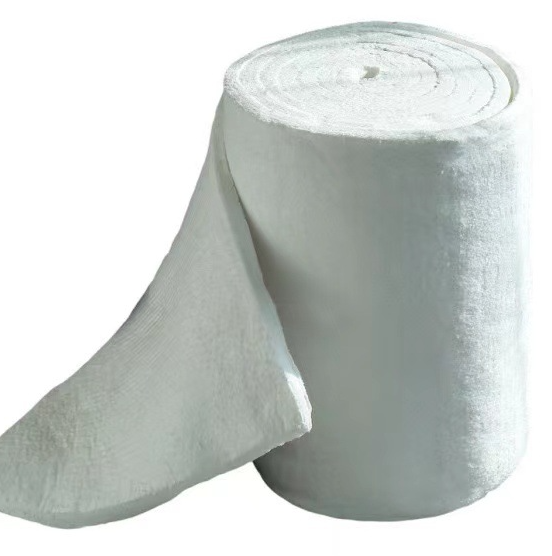
Ceramic fibre blanket is a soft, fibrous thermal insulation material with a low thermal conductivity and excellent thermal insulation properties. It can fill the gaps between ceramic fibre modules, further enhancing the furnace lining’s airtightness and thermal insulation. Furthermore, ceramic fibre blanket possesses good elasticity and malleability, enabling it to adapt to various complex furnace shapes and dimensions.
Implementation and Results of the All-Fibre Lining Solution
Implementation Plan
Furnace Inspection and Cleaning: First, a comprehensive inspection of the kiln is carried out, and aged refractory materials and debris are removed to ensure the furnace surface is smooth and clean.
Installation of Ceramic Fibre Modules: Based on the dimensions and shape of the kiln, the ceramic fibre modules are installed one by one inside the kiln body, ensuring they fit tightly together without any gaps.
Filling with Ceramic Fibre Blanket: The gaps between the ceramic fibre modules are filled with ceramic fibre blanket to further improve the lining’s airtightness and thermal insulation.
Sealing: The inlets, outlets and inspection ports of the kiln body are sealed to ensure there are no air leaks.
Results
Reduced air leakage: The all-fibre refractory lining solution effectively resolves air leakage issues in the kiln, resulting in a more uniform internal temperature distribution and improved product quality.
Enhanced thermal efficiency: The excellent thermal insulation properties of the ceramic fibre modules and ceramic fibre blankets reduce the temperature of the kiln shell, minimising heat loss and improving thermal efficiency.
Extended Service Life: Ceramic fibre materials possess excellent thermal shock resistance and chemical stability, enabling them to withstand high temperatures and corrosive environments, thereby extending the service life of the kiln.
Reduced Operating Costs: By improving thermal efficiency and extending service life, the all-fibre lining solution reduces a company’s operating costs and enhances economic benefits.
Case Studies and Future Prospects
Currently, the all-fibre furnace lining solution combining ceramic fibre modules and ceramic fibre blankets has been widely adopted in kilns across multiple industries, with proven results. For example, in kilns within the glass, ceramics and metallurgy sectors, this solution has effectively resolved the problem of heat loss due to air leakage, improving both kiln operational efficiency and energy utilisation.
Looking ahead, with continuous technological progress and increasingly stringent environmental regulations, the all-fibre furnace lining solution will be adopted and promoted across a wider range of sectors. Furthermore, as ceramic fibre materials continue to be innovated and refined, their performance will be further enhanced, providing even more robust assurance for the efficient operation of kilns.
Conclusion
The all-fibre furnace lining solution, comprising ceramic fibre modules and ceramic fibre blankets, is an effective means of addressing the problem of heat loss due to air leakage in kilns. By implementing this solution, enterprises can improve the operational efficiency and energy utilisation of their kilns, reduce operating costs and enhance economic benefits. Furthermore, this solution offers advantages such as environmental friendliness and sustainability, aligning with current societal trends. Therefore, for enterprises pursuing high efficiency, environmental protection and sustainable development, opting for the all-fibre lining solution is undoubtedly a wise choice.