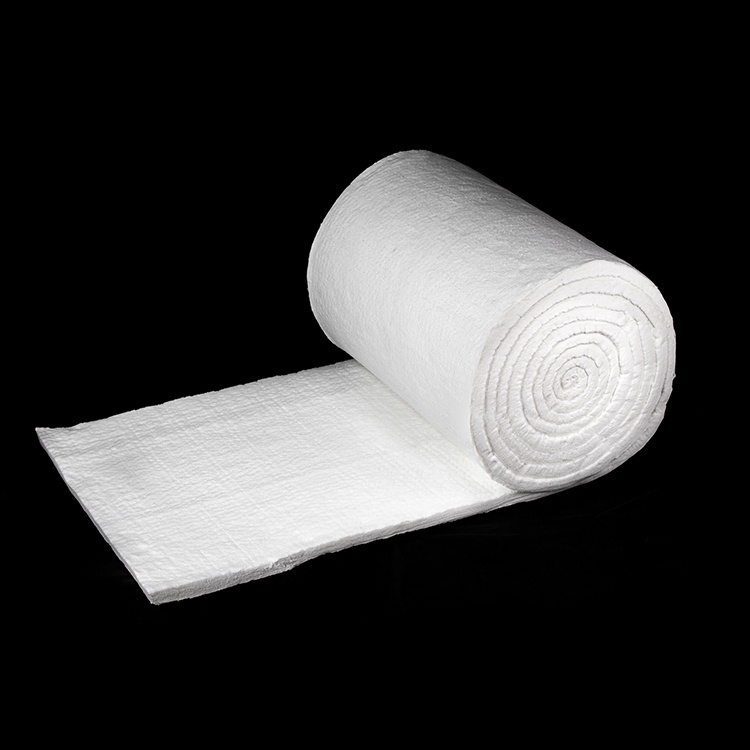
Ceramic fibre blankets are widely used as insulation for kilns, high-temperature equipment, pipework and similar applications due to their high-temperature resistance and excellent thermal stability. Apart from certain applications where they are used as consumables, they are also subject to damage when used as insulation for kilns and high-temperature equipment, necessitating frequent replacement. However, in practical applications, understanding the causes of damage to ceramic fibre blankets can help to extend their service life. Today, Mu Yi will outline the causes of damage to ceramic fibre blankets during use.
I. Damage caused by mechanical stress
Ceramic fibre blankets are flexible and possess good tensile strength; however, they are not wear-resistant. Wear and tear within high-temperature equipment or kilns is inevitable, and this wear accelerates the deterioration of the blankets. Furthermore, thermal expansion can cause refractory bricks and other refractory materials to be crushed; this leads to the surface of the refractory bricks flaking off, subsequently burning through the ceramic fibre blanket.
II. Thermal Damage
1. Overheating: Localised overheating within the kiln, where the ambient temperature exceeds the temperature the ceramic fibre blanket can withstand, causes a large amount of fibres to shed, resulting in damage to the blanket. To avoid this, a ceramic fibre blanket with a maximum operating temperature higher than the ambient temperature should be selected.
2. Thermal shock: Although ceramic fibre blankets possess good thermal shock resistance, sudden temperature changes can generate thermal stress, causing the surface of the refractory bricks to spall and crack, after which the flame directly burns through the ceramic fibre blanket. Production operations should be stabilised, and a reasonable heating and cooling regime for the kiln should be established.
III. Damage Caused by Chemical Corrosion
1. Alkali corrosion: Gaseous alkali salt compounds penetrate the voids within the bricks, where they condense and solidify, forming a horizontal layer of alkali salts on the surface of the ceramic fibre blanket. During production, the alkali salt content entering the kiln should be minimised.
2. Chromium corrosion: Under the influence of excessive alkali salts, chromite reacts with free (K, Na)₂O to form K₂(Na₂Cr₆). The hexavalent chromate salts produced by this chemical reaction not only cause damage to the ceramic fibre blanket.
3. Hydration: MgO reacts with water to form Mg(OH)₂, which expands in volume and thereby compromises the overall structure of refractory insulation materials such as ceramic fibre blankets used in furnace linings. Therefore, during the storage, transport and installation of ceramic fibre blankets, care must be taken to prevent moisture absorption and to protect them from water and rain.
From the above analysis, it is clear that, apart from damage to ceramic fibre blankets caused by mechanical stress, chemical erosion and moisture-induced hydration, damage resulting from other causes is attributable to the deterioration of refractory materials such as refractory bricks. Consequently, only through the appropriate combination of refractory and insulating materials can the overall refractory structure be optimised and its service life extended.