Against a backdrop of frequent building fires and growing concerns over the hazards posed by new building materials, fire safety in buildings has become a global priority. According to data from the National Fire and Rescue Bureau, building fires account for 42% of all fires in China, with high-rise buildings, structures made of colour-coated steel panels, and new energy facilities presenting particularly significant fire risks. Traditional fireproofing materials are prone to failure under the impact of high temperatures and high-velocity air currents. In contrast, ceramic fibre blankets, with their high-temperature resistance, lightweight flexibility and strong chemical stability, have emerged as the core solution for upgrading fire barriers in buildings. Today, Mu Yi will provide an in-depth analysis of the key role played by ceramic fibre blankets in building fire safety, drawing on their technical principles, international case studies and industry standards.
I. Ceramic Fibre Blankets: A Breakthrough Material in Fire Protection Technology
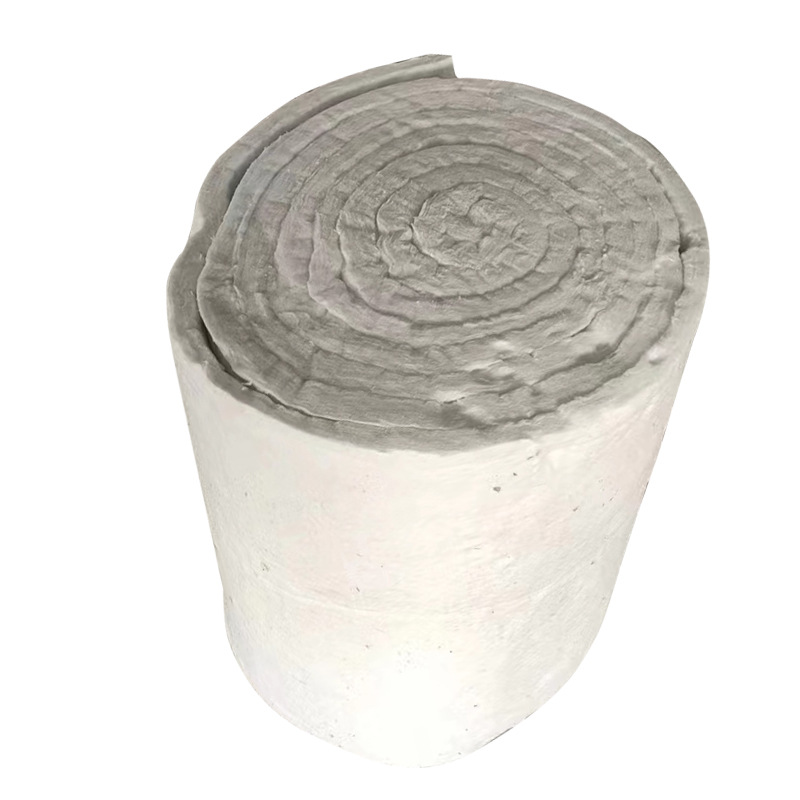
Composed primarily of aluminium oxide and silicon dioxide, ceramic fibre blankets are manufactured by melting the raw materials at high temperatures and forming them into fibre batts via spinning or blowing processes, before being shaped through a double-sided needling process. Their core advantages are as follows:
Extreme Heat Resistance:
With a long-term operating temperature of 900°C, their composite structure can withstand temperatures of up to 1,700°C, far exceeding that of traditional fireproof materials (such as rock wool, which has a temperature resistance of only 600°C).
Tests conducted in German laboratories have shown that after three hours of continuous exposure to 1,200°C, the ceramic fibre blanket retains its structural integrity, with a thermal insulation performance decline of less than 5%.
High-Efficiency Thermal Insulation and Energy Saving:
With a thermal conductivity as low as 0.035 W/(m·K), it offers 10%–30% greater energy savings than insulating bricks, effectively reducing energy consumption for building air conditioning.
In a fire protection case study involving cables in the Tokyo Metro tunnels, wrapping cables with ceramic fibre blankets reduced the fire scene temperature from 1,000°C to below 200°C, buying crucial time for rescue operations.
Lightweight, Flexible and Easy to Install:
With a density of just one-fifth that of traditional refractory bricks, it can be bent to wrap around complex structures without the need for additional support.
Nanjing Mancate’s ceramic fibre blankets are available in thicknesses ranging from 5 to 50 mm and can be custom-cut, with installation efficiency 40% higher than that of traditional materials.
Environmental friendliness and safety:
Free from harmful substances such as asbestos and polybrominated biphenyls, they do not release toxic gases at high temperatures and comply with the EU RoHS environmental standards.
In a case study involving bushfire protection in Australia, villagers who covered their roofs with ceramic fibre blankets saw a 70% increase in the survival rate of their homes.
II. Analysis of Application Scenarios for Building Fire Isolation Zones
1. Reinforcement of Fire Compartments in High-Rise Buildings
Key Challenge: Due to the vertical chimney effect in high-rise buildings, fire can spread at speeds of up to 3–5 metres per second.
Solution:
Install fire isolation barriers made of ceramic fibre blankets in critical areas such as stairwells, refuge floors and cable shafts to form a ‘fire compartment’ structure.
Case Study: The Shanghai Tower wrapped the core shaft lift shafts with ceramic fibre blankets and, in conjunction with an intelligent smoke detection system, successfully passed the UL 1709 rapid heating fire test.
2. Retrofitting of Coloured Steel Panel Buildings
Key Challenge: Traditional sandwich core materials in coloured steel panels (polystyrene, polyurethane) release large quantities of toxic gases when burning, with fire spread rates exceeding 200°C per minute.
Solution:
Use ceramic fibre blankets as a replacement for external insulation or sandwich core materials, increasing the fire resistance rating to over 2 hours.
Case Study: In a renovation project at an industrial park in Jiangsu, fire-resistant ceramic fibre blanket barriers reduced fire damage to factory buildings by 60%.
3. Safety Protection for New Energy Facilities
Key Challenge: Equipment such as lithium-ion battery energy storage stations and photovoltaic inverters can reach temperatures exceeding 1,000°C during thermal runaway, rendering traditional fireproofing materials ineffective.
Solution:
Lay ceramic fibre blankets between battery modules and on the inner walls of electrical cabinets to form a physical thermal barrier.
Case Study: Tesla’s Shanghai Gigafactory used ceramic fibre blankets to wrap the battery testing area, successfully passing the UL 9540A thermal runaway test.
4. Conservation of Historic and Cultural Buildings
Key Challenge: Historic wooden structures have low fire resistance ratings, and restoration costs following a fire are prohibitively high.
Solution:
Embed fire-resistant strips of ceramic fibre blankets into beam-column joints and the gaps between bracket sets, thereby balancing fire protection with the preservation of the heritage site’s authenticity.
Case Study: The Cathedral of Seville in Spain utilised ceramic fibre blankets to reinforce its wooden dome, reducing the fire risk rating from ‘extremely high’ to ‘medium’.
III. Technical Standards and Industry Regulations
1. International Standard Certification
Ceramic fibre blankets must pass the ISO 1182 non-combustibility test, the ASTM E84 surface burning characteristics test, and the EN 13501-1 fire resistance classification certification.
EU CE certification requires that ceramic fibre blankets have a thermal shrinkage rate of ≤3% at 800°C and a tensile strength of ≥0.05 MPa.
2. Domestic Regulatory Requirements
The Code for Fire Protection in Architectural Design explicitly stipulates that fire barriers in buildings must be constructed using Class A non-combustible materials with a fire resistance rating of ≥1 hour.
The national standard for ceramic fibre products (GB/T 3003-2017) sets out quantitative criteria for the chemical composition, physical properties and installation procedures of ceramic fibre blankets.
3. Key Points for Installation and Maintenance
Installation specifications:
The width of the fire barrier must be ≥300 mm, and joints must be sealed using high-temperature-resistant tape or aluminium foil tape.
When installing on the surface of high-temperature pipes, a 5%–8% expansion gap must be allowed.
Maintenance Requirements:
Regularly inspect the surface of the fibre blankets for damage or chalking; thermal imaging inspections are recommended every three years.
Avoid direct contact with strong acids or alkalis; where necessary, use stainless steel sleeves for protection.
IV. Future Trends: Smart Technology and Composite Materials
Smart Monitoring Integration:
Develop ceramic fibre blankets with built-in temperature sensors to monitor high-temperature areas in real time and trigger alarms.
Nanjing Mancate has launched an IoT-enabled fire blanket that supports data integration with fire control platforms.
Composite Material Innovation:
By combining ceramic fibre blankets with aerogels and nano-insulation coatings, the thermal conductivity can be further reduced to 0.02 W/(m·K).
The aerospace sector has verified that ceramic fibre blanket/silicon carbide composite materials can withstand temperatures of up to 2000°C.
Policy and Market Drivers:
The EU’s ‘Green Deal’ mandates a 40% reduction in carbon emissions from building fire protection materials by 2030, driving the large-scale adoption of ceramic fibre blankets.
It is projected that between 2025 and 2030, the global market for ceramic fibre blankets will grow at a CAGR of 8%, with the construction sector accounting for 45% of the market.
Conclusion
The application of ceramic fibre blanket fire barriers marks a transition in building fire protection technology from ‘passive fire retardancy’ to ‘active defence’. Their ultra-high temperature resistance, lightweight design and eco-friendly properties provide reliable solutions for high-rise buildings, new energy facilities and the conservation of historic buildings. With breakthroughs in intelligent monitoring technology and composite materials, ceramic fibre blankets will play an increasingly significant role in global fire safety systems, helping to achieve the goal of ‘zero fires’.