Ceramic fibre paper is a paper-like material made from ceramic fibres. It is formed by a specific manufacturing process that transforms ultra-fine ceramic fibres into a fibrous network structure, similar to that of conventional paper. The fibrous network is typically made from ceramic materials such as aluminium oxide and zirconium oxide, which possess high-temperature stability, corrosion resistance and good electrochemical stability. The fibres may take the form of fibre bundles, a fibrous network or a fibre film, with the specific form depending on application requirements and the manufacturing method.
Owing to its inherent properties, ceramic fibre paper is utilised in a wide range of fields, including energy storage (such as lithium-ion battery separators), high-temperature filtration, thermal insulation and catalyst supports, making it an important advanced material.
By providing chemical stability, mechanical support, efficient ion transport and thermal stability, ceramic fibre paper significantly extends the cycle life of batteries. It can slow down capacity degradation and performance loss, thereby prolonging the service life of the battery. The introduction of ceramic fibre paper in lithium-ion batteries can improve battery performance and safety, whilst facilitating rapid charging and high power output. It is one of the advanced materials in the field of lithium-ion batteries.
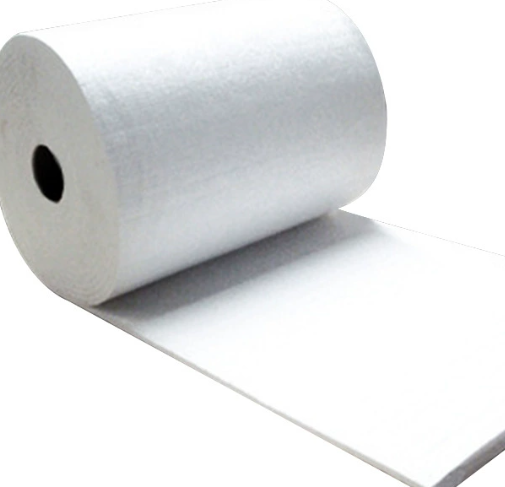
In lithium-ion batteries, ceramic fibre paper serves as a key component of the battery separator layer, performing functions such as isolating the positive and negative electrodes, facilitating ion transport, resisting chemical corrosion and providing mechanical support. It effectively prevents short circuits and direct electrical contact, thereby ensuring battery safety.
Furthermore, ceramic fibre paper possesses excellent ionic conductivity, which aids the transport of lithium ions within the battery, maintains the battery’s charge balance and enables discharge and charge cycles.
Furthermore, ceramic fibre paper is resistant to chemical corrosion from the electrolyte and active materials, enabling it to operate stably within the battery environment without being eroded by the electrolyte. This extends the battery’s service life and provides mechanical support to maintain the battery’s shape and integrity.
Consequently, ceramic fibre paper for lithium-ion batteries plays a vital role in enhancing the performance, cycle life and safety of these batteries.