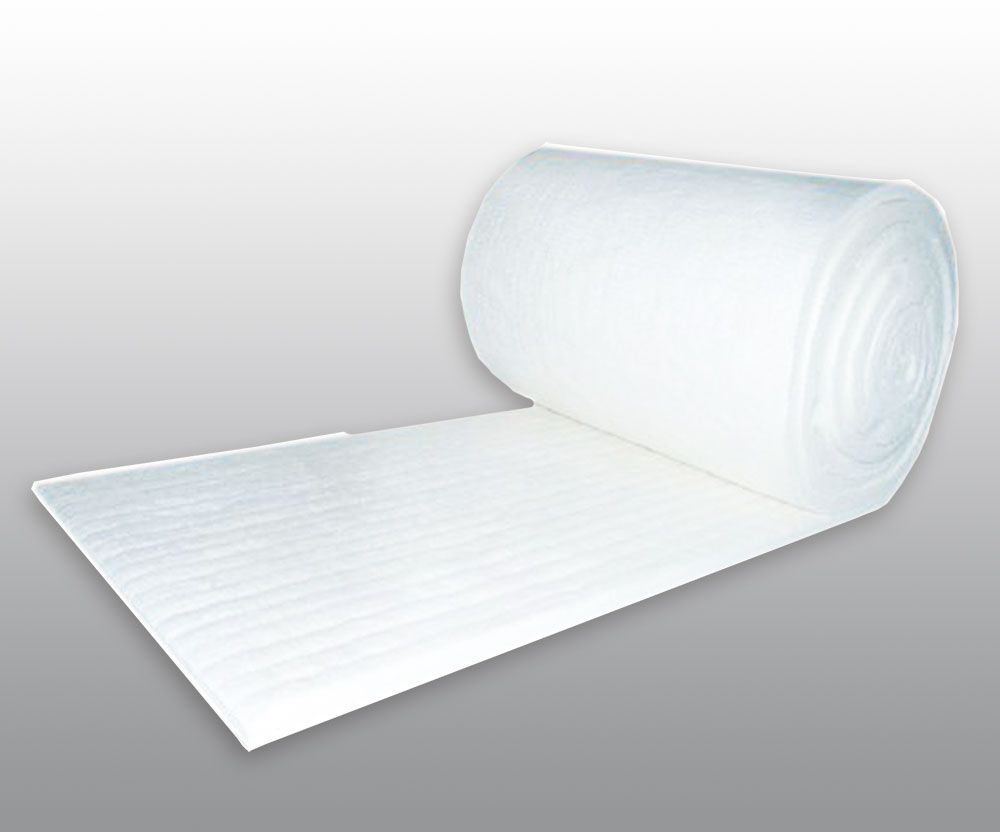
Ground-level combustion towers at oil refineries and similar facilities are generally vertical cylindrical structures. These ‘flare systems’, also known as ground-level combustion towers, are specialised combustion facilities designed to treat flammable and toxic gases and vapours from petrochemical plants, oil refineries, chemical plants and other sources; they are a key measure for ensuring safe production at these facilities and reducing environmental pollution. Their diameters range from a few metres to over ten metres, with heights ranging from over ten metres to several tens of metres. Operating temperatures are around 950 °C, and the refractory material selected is standard Type 1260 ceramic fibre products, which can withstand long-term operating temperatures of up to 1,000 °C. The recommended configuration for ceramic fibre products consists of masonry-type ceramic fibre modules combined with layered ceramic fibre blankets as a backing layer, a combination that achieves greater lining integrity.
Advantages of using ceramic fibre in ground-mounted flares:
1. Ease of procurement
Refractory bricks are predominantly used in kilns, where manufacturers require large quantities of standardised bricks. As ground-mounted flares require relatively small quantities, it can be difficult to source suppliers when special manufacturing requirements arise or when only a small number of bricks are needed. Refractory ceramic fibre modules are easy to process, and their dimensions and shapes are readily producible.
2. Reduced joints, lower heat loss and improved thermal efficiency
Installation is convenient and rapid. Constructing the furnace lining using ceramic fibre modules and ceramic fibre blankets reduces thermal leakage through joints whilst simplifying installation, improving installation efficiency and accelerating the construction schedule.
3. Excellent thermal insulation and energy-saving performance
Structural improvements, such as optimised installation and the reduction of heat dissipation points, can significantly improve the thermal efficiency of the heating furnace.
4. Technical performance advantages
The lining utilises a composite structure of layered ceramic fibre blankets and ceramic fibre modules, with a total insulation thickness of 200 mm. From the cold face to the hot face, the layers are arranged as follows: ceramic fibre blanket, vapour-barrier aluminium foil, ceramic fibre blanket, and ceramic fibre modules.
Ground flares are used by petrochemical enterprises to treat toxic or non-toxic flammable gases with moderate or low toxicity. As lightweight, highly efficient thermal insulation materials, ceramic fibre modules and ceramic fibre blankets serve as the primary lining in ground flare projects and offer significant advantages over traditional refractory bricks.