The heating furnace of the hot-rolling mill is designed for an internal operating temperature of ≤1350 °C, with an external temperature of ≤60 °C under stable operating conditions; therefore, plastic refractories may be used for the furnace body, supplemented by ceramic fibre boards and lightweight bricks. The specific grades and thicknesses of the refractory materials selected for each section in this paper are shown in Table 1:
Configuration of refractory materials (plastic refractories and ceramic fibre boards) for the heating furnace
(1) Plastic refractories possess high refractoriness and high flexural strength; their function is to come into direct contact with the furnace flame and resist erosion by the furnace gases. To reduce construction costs, and taking into account the differences in operating temperatures across various parts of the furnace, multiple grades of plastic refractories have been selected in the design.
(2) The thermal conductivity of lightweight bricks lies between that of plastic refractories and fibre refractories, and their operational positions are also situated between the two. However, as there are many areas within the furnace where plastic refractories and ceramic fibre board refractories come into direct contact, and since heat loss calculations are based on the refractory with the lower thermal conductivity, their chemical composition and physical properties may be disregarded.
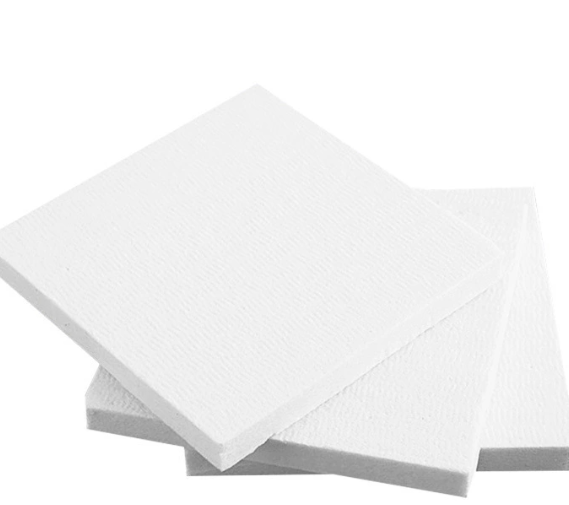
(3) As plastic refractories have a relatively high thermal conductivity, ceramic fibre board refractories with very low thermal conductivity have been incorporated into the design to minimise energy loss from the heating furnace and improve energy efficiency. Compared with mouldable refractory, ceramic fibre board can be regarded as having a thermal conductivity of zero, i.e. it acts as a thermal insulator.
(4) Taking into account the specific characteristics of the furnace sections and the convenience of installation, ceramic fibre board is used for the furnace walls, whilst ceramic fibre blanket is used for the furnace roof; as space is limited in the furnace roof area, a thin ceramic fibre blanket with an even lower thermal conductivity is employed.
A summary of the table above shows that plastic refractory is not used on the furnace floor; consequently, thermal insulation of the furnace body need only consider the furnace walls and roof, with the refractory material on the roof being the thinnest. Furthermore, as different grades of plastic refractory are used in various sections of the furnace body, the plastic refractory and ceramic fibre board refractory materials within the furnace (roof and walls) are tightly bonded together through the ramming process, forming a single, integrated structure.