In the field of advanced materials, ceramic fibre cloth and carbon fibre cloth are like two ‘double-edged swords’—the former excels in high-temperature resistance and corrosion resistance, whilst the latter reigns supreme in terms of high strength and light weight. However, the application scenarios and market acceptance of both have always been constrained by a core dilemma: how to find the optimal balance between cost and performance. Today, Mu Yi will analyse the balance between these two types of fibre cloth from the perspectives of material properties, cost structure, application scenarios and future trends.
I. Material Properties: Performance Differences Determine Application Limits
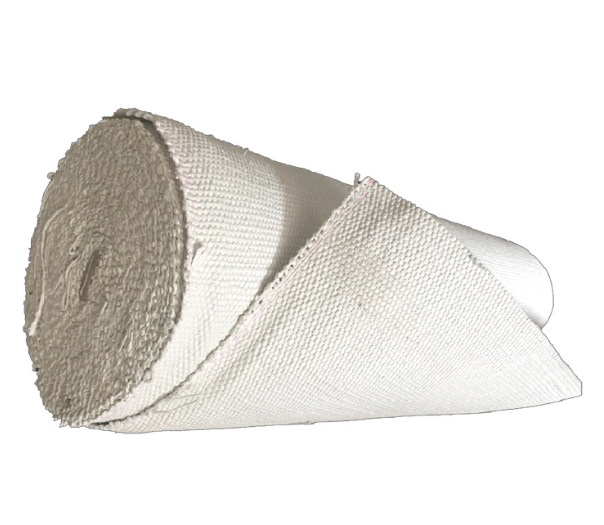
1. Ceramic Fibre Cloth: The ‘Invisible Shield’ in High-Temperature Applications
Ceramic fibre cloth is manufactured from oxides (such as aluminium oxide and aluminium silicate) or non-oxides (such as silicon carbide) using the sol-gel method or chemical vapour deposition. Its core properties include:
High-temperature resistance: Aluminium oxide fibres can withstand long-term temperatures of up to 1,600°C, whilst silicon carbide fibres can withstand temperatures of 1,800°C in non-oxidising environments—far exceeding the capabilities of traditional metallic materials.
Low thermal conductivity: With a thermal conductivity of just 0.03 W/m·K at room temperature—one-fifth that of refractory bricks—it can reduce energy consumption in industrial furnaces and kilns.
Chemical stability: Resistant to acid and alkali corrosion (except for strong acids and hydrofluoric acid), making it suitable for chemical plant linings and nuclear waste treatment.
Lightweight and high-strength: With a density of just 64–500 kg/m³ and a tensile strength of 3,800–4,800 MPa, it outperforms most metals.
Typical applications: Thermal insulation for aeroengine components, composite materials for photovoltaic frames, lithium-ion battery separators, and high-temperature industrial furnace linings, amongst others. For example, replacing the sealing material for reaction chamber lids with ceramic fibre cloth reduced material costs from 49.2 yuan/kg to 12 yuan/kg, whilst simultaneously increasing temperature resistance to 1,200 °C.
2. Carbon Fibre Cloth: The ‘King of Lightweight’ Structural Reinforcement
Carbon fibre cloth is primarily based on polyacrylonitrile (PAN) and is produced through a high-temperature carbonisation process. Its core properties include:
High strength and high modulus: T800-grade carbon fibre has a tensile strength of 5.5 GPa and a modulus of 294 GPa, which is 10 times that of steel.
Lightweight: With a density of just 1.8 g/cm³—only a quarter that of steel—it reduces the dead weight of structures.
Fatigue resistance: Under alternating loads, its fatigue life is several times that of metals, making it suitable for dynamic structures.
Electrical conductivity: With low surface resistivity, it can be used for electromagnetic shielding or as an electrode material in batteries.
Typical applications: Aerospace (aircraft fuselages, satellite mounts), automotive (driveshafts, vehicle bodies), sports equipment (golf clubs, tennis rackets), and structural reinforcement (bridge crack repair), amongst others. For example, in a bridge reinforcement project utilising carbon fibre fabric, the construction period was reduced by 40 per cent and the load-bearing capacity increased by 30 per cent.
II. Cost Structure: An ‘Analysis of the Cost Chain’ from Raw Materials to Application
1. Ceramic Fibre Fabric: Cost Challenges in the High-End Market
Raw material costs: High-purity oxides or carbides are expensive; for instance, the cost of silicon carbide fibre raw materials accounts for over 60 per cent of total production costs.
Processing Costs: The sol-gel method requires multi-step chemical synthesis and significant capital investment in equipment; the chemical vapour deposition (CVD) method is energy-intensive and has low per-line production capacity.
Economies of Scale: Global annual production stands at only a few thousand tonnes, far below the hundreds of thousands of tonnes produced for carbon fibre, resulting in insufficient allocation of fixed costs per unit. For example, when annual SiC fibre production is 10 tonnes, the price reaches US$1,250 per kg, whilst even at an annual output of 10,000 tonnes, the price remains higher than that of carbon fibre.
Cost optimisation case study: By refining the fibre spinning process (fibre diameter 3.0–5.0 μm, length 150–250 mm), the tensile strength of ceramic fibre fabric was increased by 20 per cent, whilst production efficiency rose by 15 per cent, thereby indirectly reducing unit costs.
2. Carbon Fibre Fabric: A ‘Textbook Example’ of Cost Reduction through Scale
Raw Material Costs: PAN-based precursor filaments account for over 50 per cent of carbon fibre costs; however, by optimising the spinning process (e.g. dry-jet-wet spinning), the cost of precursor filaments can be reduced by 30 per cent.
Energy Costs: Electricity costs for the carbonisation process account for 25–30 per cent; the adoption of waste heat recovery technology can reduce energy consumption by 15 per cent.
Economies of scale: With global annual production exceeding 100,000 metric tonnes, leading companies (such as Toray and Huntley) have driven down the price of T700-grade carbon fibre to below US$20 per kilogram through large-scale production.
Cost optimisation case study: UK-based RK Ltd utilises commercial-grade polyacrylonitrile macroporous filaments (320K monofilaments) to produce medium-strength carbon fibre, priced at just one-third of that of aerospace-grade carbon fibre, thereby successfully penetrating the building materials market.
III. Application Scenarios: Cost Compromises Driven by Performance Requirements
1. Ceramic Fibre Cloth: ‘Irreplaceability’ in High-End Applications
In applications such as the hot-end components of aeroengines and the thermal insulation layers of nuclear reactors, the high-temperature resistance of ceramic fibre cloth makes it the only viable option. For example, after ceramic fibre cloth was adopted for the thermal insulation layer of a certain type of aeroengine nozzle, the surface temperature was reduced by 200°C and the service life was extended threefold, despite a 5 per cent increase in material costs.
III. Application Scenarios: Cost Compromises Driven by Performance Requirements
1. Ceramic Fibre Cloth: ‘Irreplaceable’ in High-End Applications
In applications such as the hot-end components of aeroengines and the thermal insulation layers of nuclear reactors, the high-temperature resistance of ceramic fibre cloth makes it the only viable option. For example, after ceramic fibre cloth was adopted for the thermal insulation layer of a particular aeroengine nozzle, the surface temperature was reduced by 200°C and service life was extended threefold; although material costs increased by 50 per cent, overall maintenance costs fell by 70 per cent.
2. Carbon Fibre Fabric: The ‘Mass Market’ Prioritising Value for Money
In fields such as building reinforcement and automotive weight reduction, carbon fibre fabric requires a balance between performance and cost. For example:
Building Reinforcement: The cost of reinforcement using carbon fibre fabric is approximately 200–500 yuan per square metre. Although this is higher than steel bonding reinforcement (577 yuan per square metre), the construction period is reduced by 50 per cent, and as no regular anti-corrosion maintenance is required, the long-term costs are lower.
Automotive drive shafts: Carbon fibre composite drive shafts reduce weight by 60 per cent and improve transmission efficiency by 8 per cent. Although the unit price is three times that of steel shafts, the vehicle’s overall fuel consumption is reduced by 5 per cent, allowing the cost to be recouped within five years.
IV. Future Trends: ‘Dual-Drive’ Approach of Technological Breakthroughs and Market Expansion
1. Ceramic fibre cloth: Three key pathways to cost reduction and efficiency improvement
Raw Material Substitution: Develop low-cost oxide fibres (such as mullite fibres) to reduce raw material costs by 40 per cent.
Process Innovation: Promote the precursor conversion method to shorten the production cycle by 30 per cent.
Application Expansion: Enter the new energy sector (such as photovoltaic frames and lithium-ion battery separators), utilising policy subsidies to offset part of the costs.
2. Carbon Fibre Fabric: The ‘Divergence’ Between High Performance and Low Cost
High-end market: Research and development of ultra-high-performance fibres of T1000 grade or higher to meet the demands of aerospace environments.
Mass market: Through large-scale production of asphalt-based carbon fibre, drive prices below US$10 per kg to partially replace certain metallic materials.
Conclusion: The Key to Balance Lies in ‘Precise Matching’
The balance between cost and performance for ceramic fibre cloth and carbon fibre cloth is, in essence, a three-way trade-off between technical feasibility, economic rationality and market acceptance. For users, the key to making a choice lies in identifying the core requirements of the specific application: if high-temperature resistance and corrosion resistance are required, the ‘high cost’ of ceramic fibre cloth is a necessary investment; if the focus is on lightweight construction and high strength, the ‘value for money’ offered by carbon fibre cloth is more advantageous. In the future, with advances in materials science and manufacturing technology, both materials are expected to achieve dual breakthroughs in ‘performance gains’ and ‘cost reductions’ across a wider range of fields.