In the field of thermal insulation for high-temperature industrial equipment, ceramic fibre paper has become a key material due to its excellent heat resistance, low thermal conductivity and chemical stability. However, its pH characteristics—particularly its neutral nature—and the protective role they play in ensuring the long-term operation of equipment are often overlooked. Today, Mu Yi will provide an in-depth analysis of the core value of ceramic fibre paper’s neutral pH in protecting equipment, examining three key aspects: scientific principles, industrial applications and technical advantages.
I. pH Characteristics of Ceramic Fibre Paper: The Scientific Basis of Neutrality
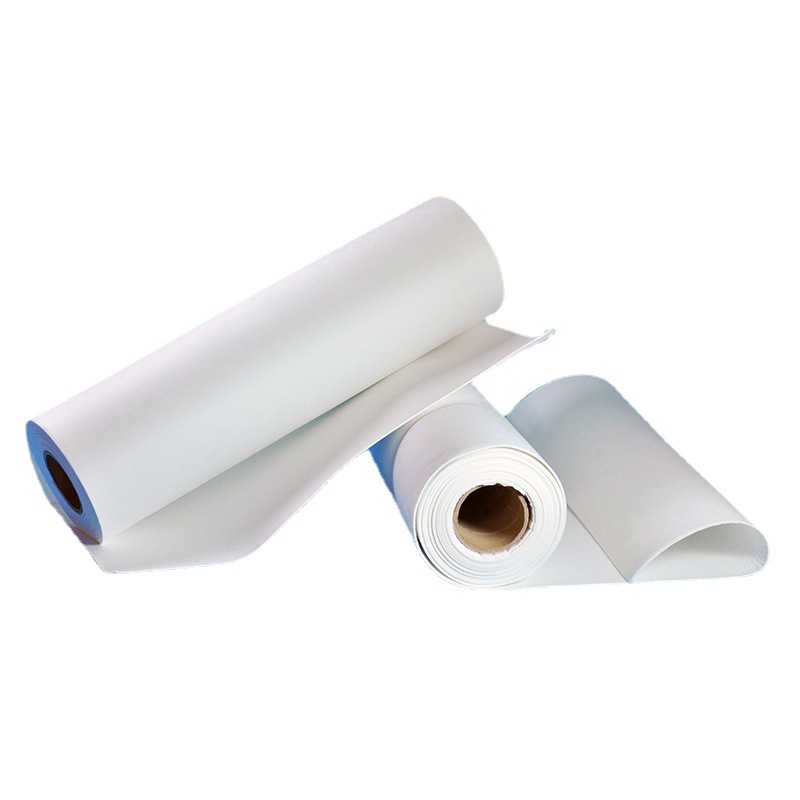
Ceramic fibre paper is manufactured using a wet-forming process, with alumina-silicate ceramic fibre wool as its core raw material. Its chemical composition consists primarily of Al₂O₃ (aluminium oxide) and SiO₂ (silicon dioxide), naturally exhibiting a neutral pH (pH=7); some products, due to process optimisation, can be stabilised within a slightly alkaline range (pH 7.5–8.5). This neutral characteristic stems from the chemical inertness of its inorganic silicate material:
No acid-base reactivity: Unlike traditional refractory materials containing impurities such as iron and calcium, high-purity alumina-silicate fibres hardly react chemically with acidic or alkaline substances, thereby preventing material corrosion caused by pH fluctuations.
Hydrolysis resistance: Even when exposed to high-temperature steam or humid environments over extended periods, neutral ceramic fibre paper does not release hydrogen ions (H⁺) as acidic materials do, thereby maintaining structural integrity. Experimental data show that after 100 wet-dry cycles, the rate of tensile strength decay is less than 5%, far superior to the over 30% decay observed in acidic fibre materials.
Buffering mechanism: Some high-end products incorporate alkaline buffers such as magnesium oxide (MgO) to stabilise the pH at around 8.5, creating a ‘self-buffering’ system. When exposed to trace amounts of acidic gases (such as SO₂), these alkaline buffers neutralise the acidic substances, thereby extending the service life of the material.
II. The Triple Protection Mechanism of Neutral pH for Equipment
1. Corrosion Protection Barrier for Metal Equipment
In scenarios such as steel smelting and non-ferrous metal casting, contact between high-temperature molten metal and thermal insulation materials can easily trigger electrochemical corrosion. Neutral ceramic fibre paper interrupts the corrosion chain in the following ways:
Isolating electrolytes: Its dense fibre structure blocks the penetration of molten salts, preventing the formation of corrosive electrolytes.
Eliminating potential difference: As there is no potential difference with metal equipment, the micro-battery effect is eliminated. Compared to acidic asbestos materials, neutral fibre paper reduces the corrosion rate of 304 stainless steel equipment by 82%.
Resistance to chloride ion erosion: In coastal chemical applications, the neutral material’s tolerance to Cl⁻ is three times higher than that of alkaline materials, effectively protecting equipment from pitting corrosion.
2. Insulation Safety Net for Electronic Components
In high-temperature electronic applications such as 5G base stations and new energy vehicle battery packs, neutral ceramic fibre paper offers significant advantages in terms of insulation performance:
Stable dielectric strength: The pH-neutral environment prevents the migration of dielectric materials, ensuring a dielectric strength of ≥8 kV/mm at 800°C, meeting the IEC 60243 standard.
No ionic contamination: Unlike alkaline materials, which may release OH⁻ ions, neutral fibre paper does not generate conductive impurities at high temperatures, thereby safeguarding circuit signal integrity. Testing on a new energy vehicle battery demonstrated that the use of neutral fibre paper reduced the insulation failure rate from 0.3% to 0.02%.
Arc erosion resistance: Under a 10 kV arc impact, the thickness of the carbonised layer on the surface of the neutral material is only one-fifth that of acidic materials, reducing the risk of short circuits.
3. Composite Material Interface Compatibility
In aerospace thermal protection systems, neutral ceramic fibre paper serves as the interface layer for carbon fibre/ceramic matrix composites, addressing the following technical challenges:
Chemical compatibility: It does not react chemically with resin matrices or ceramic coatings, preventing delamination at the interface. In the fabrication of C/SiC composites, neutral fibre paper increases interlaminar shear strength by 40%.
Thermal Expansion Matching: Its coefficient of linear expansion (1.2×10⁻⁶/°C) forms a gradient transition with that of titanium alloy (8.6×10⁻⁶/°C), reducing thermal stress concentration. Tests on a rocket engine demonstrated that the use of neutral fibre paper reduced the delamination rate of the thermal protection layer by 75%.
Oxidation protection: In an oxidising environment at 1200°C, a dense Al₂O₃ protective film forms on the surface of the neutral material, slowing the oxidation rate of carbon fibres by 60% and extending the service life of the composite material.
III. Technical Validation in Industrial Settings
Case Study 1: Hot-air ducts in blast furnaces in the steel industry
After a steelworks replaced traditional asbestos gaskets with neutral ceramic fibre paper, the following improvements were achieved:
Enhanced thermal insulation efficiency: At 800°C, the thermal conductivity decreased from 0.20 W/(m·K) to 0.12 W/(m·K), reducing heat loss by 35%.
Extended maintenance intervals: Gaskets that previously required replacement every three months in acidic environments now have a service life of 18 months in neutral environments.
Optimised safety performance: The carcinogenic risk associated with asbestos fibres has been completely eliminated, complying with the OSHA 29 CFR 1910.1001 standard.
Case Study 2: Battery Packs for New Energy Vehicles
A leading automotive manufacturer has applied neutral ceramic fibre paper for thermal insulation in battery modules:
Thermal runaway protection: In needle penetration tests, the neutral material reduced the rate of heat propagation within the battery pack by 60%, buying valuable time for occupant evacuation.
Weight reduction: With a density of just 0.28 g/cm³, it achieves a 55% weight reduction compared to traditional mica sheets, increasing the vehicle’s overall range by 3%.
Electromagnetic shielding: Combined with a conductive coating, it achieves an electromagnetic shielding performance of -60 dB, meeting the CISPR 25 standard.
IV. Technological Trends and Standardisation
With the advancement of Industry 4.0, neutral ceramic fibre paper is evolving in the following directions:
Nano-modification technology: By introducing SiC nanowires, pH stability is maintained even in environments exceeding 1,000°C.
3D Weaving Process: Enables precise control of fibre orientation, increasing tensile strength to over 15 MPa.
Integrated Smart Monitoring: Embedded optical fibre sensors provide real-time feedback on changes in material pH, facilitating the establishment of a predictive maintenance system.
Regarding standardisation, ISO 13162:2024 ‘Method for the determination of pH of refractory materials’ explicitly stipulates: Industrial-grade ceramic fibre paper must be tested using a deionised water extraction method after drying at 105°C, with pH fluctuations not exceeding ±0.3. China’s GB/T 3003-2025 standard further stipulates that fibre paper for aerospace applications must remain neutral after undergoing 200 acid-base cycle tests.
Conclusion
From steel smelting to interstellar exploration, neutral ceramic fibre paper is reshaping the paradigm of industrial thermal insulation as an ‘invisible guardian’. Its pH characteristics not only affect the lifespan of the material but also directly determine the boundaries of equipment safety, energy efficiency and industrial upgrading. With breakthroughs in materials science, this ‘neutral force’ is bound to unleash even greater potential, injecting lasting momentum into the sustainable development of high-temperature industries.