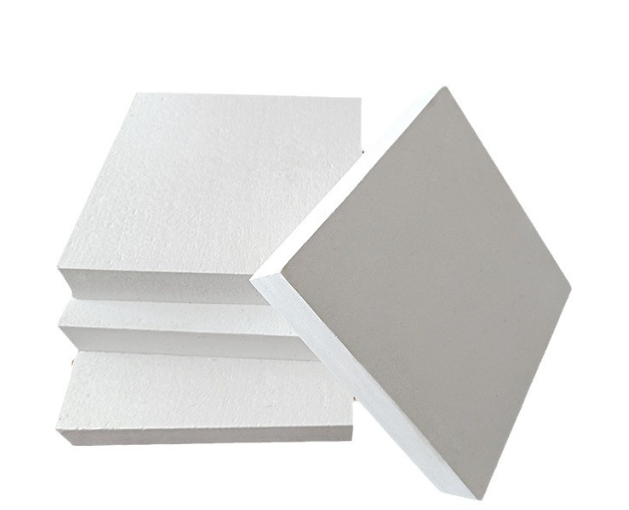
In the field of thermal insulation materials for industrial furnaces, ceramic fibre boards have long been dominated by European and American companies; the associated technical barriers and patent restrictions once left domestic enterprises trapped in a dilemma characterised by ‘reliance on imports for high-end products and cut-throat competition in the low-end market’. However, as domestic enterprises have made breakthroughs in core technologies such as ‘zirconia-containing fibre formulations’ and ‘ultra-high-temperature sintering processes’, domestically produced ceramic fibre boards are set to achieve an import substitution rate exceeding 45 per cent by 2025, whilst completely overtaking imported products in new energy sectors such as photovoltaic thermal fields and hydrogen electrolysers.
I. Technological Breakthroughs: The Leap from ‘Following’ to ‘Leading’
1.1 Breakthrough in Core Formulation: The Zirconia-Alumina Composite System
The technology for zirconia-containing ceramic fibre boards (ZrO₂ content ≥ 15 per cent), long monopolised by European and American firms, boasts a maximum temperature resistance of 1,400°C; however, early domestic materials suffered from insufficient thermal shock stability due to uneven dispersion of zirconia. Leading domestic enterprises have utilised the ‘sol-gel method’ to achieve uniform dispersion of nanoscale zirconia, developing a ternary ‘zirconia-alumina-silica’ composite fibre. This enables the material to maintain a tensile strength of ≥0.8 MPa at temperatures as high as 1,350 °C, whilst reducing costs by 30 per cent compared to imported products.
1.2 Upgrading Process Equipment: 10,000-metric-tonne Continuous Fibrillation Production Lines
Traditional ceramic fibre board production relies on manual laying, resulting in thickness uniformity errors of up to ±0.5 mm. Companies such as Mu Yi have established “10,000-metric-tonne-scale continuous fibre formation and automated moulding” production lines. By utilising laser positioning and servo control systems, they have reduced product thickness tolerances to ±0.1 mm. Simultaneously, an “online quality monitoring system” enables automatic defect detection, raising the yield rate to 98.5 per cent.
1.3 Breakthroughs in Environmental Protection Technology: Chromium-Free Coating Technology
Products from Europe and the US generally employ hexavalent chromium coatings to enhance corrosion resistance, but these pose a risk of heavy metal pollution. Domestic enterprises have developed a “silica sol–aluminium phosphate” composite coating; in thermal cycling tests at 800°C for 500 hours, the coating’s flaking rate was only one-fifth that of imported products. Having obtained RoHS certification, these products have successfully entered the high-end EU market.
II. Industrial Synergy: Building a Full-Chain Innovation Ecosystem
2.1 Localisation of Upstream Raw Materials: Resource Utilisation of Coal Gangue
Traditional ceramic fibre boards rely on high-purity aluminium oxide powder, which accounts for over 40 per cent of production costs. Domestic enterprises have utilised the mullite phase found in coal gangue to develop a ‘coal gangue–hard clay’ composite raw material formulation, reducing the cost of raw materials for each metric tonne of fibre board by 1,200 yuan. This technology has been granted a national invention patent, and large-scale production lines have been established in Shandong, Shanxi and other regions.
2.2 Intelligent Midstream Manufacturing: Digital Twin Factories
By constructing digital models of the thermal processes within kilns, domestic enterprises have achieved end-to-end optimisation of “formulation–process–energy consumption”. For example, a leading enterprise utilised CFD simulation technology to reduce sintering energy consumption from 1,800 kWh/t to 1,450 kWh/t, whilst simultaneously using AI algorithms to predict equipment failures, thereby raising the production line’s Overall Equipment Effectiveness (OEE) to 89 per cent.
2.3 Customisation in Downstream Applications: From ‘Standard Products’ to ‘Solutions’
For applications such as photovoltaic cell sintering furnaces and hydrogen electrolysers, domestic manufacturers have introduced ‘fibreboard + aerogel’ composite insulation modules, boosting equipment thermal efficiency by 15 per cent. For instance, 1,300°C-grade insulation components customised for Longi Green Energy increased cell yield from 96.2 per cent to 98.5 per cent, saving over 20 million yuan in annual electricity costs.
III. Application Innovation: Pioneering a ‘Blue Ocean Market’ for New Energy
3.1 Photovoltaics Sector: A Revolution in Thermal Insulation for HJT Cell Sintering Furnaces
The production of HJT cells requires maintaining process stability under rapid heating conditions of 230°C for 5 seconds; traditional thermal insulation materials are prone to thermal stress cracking. Domestic manufacturers have developed ‘gradient pore structure’ ceramic fibre boards; through surface microporous treatment, these achieve a thermal radiation reflectance of 92 per cent, reducing sintering energy consumption by 18 per cent compared to imported products.
3.2 Hydrogen Energy Sector: Breakthrough in Thermal Insulation Technology for PEM Electrolysers
Proton exchange membrane (PEM) electrolysers must be operated at temperatures between 80 and 90 °C, yet localised heat flux densities can reach 200 kW/m². Domestic manufacturers have introduced a dual-layer insulation system comprising “ceramic fibre paper and fibreboard”; in thermal shock tests at 1,200 °C, the rate of change in the material’s thermal conductivity was less than 5 per cent, reducing the cost of hydrogen production per cell by 0.3 yuan per Nm³.
3.3 Semiconductor Sector: Localisation of Insulation for Etching Chamber Chambers
Etching chamber chambers must withstand plasma bombardment and high-temperature corrosion; previously, insulation components were 100 per cent reliant on imports. Domestic enterprises have mastered ‘silicon nitride–yttrium oxide’ composite coating technology, reducing the material’s corrosion rate to <0.1 μm/1,000 h in a CF₄ plasma environment. This has successfully replaced a product from a major US manufacturer, reducing the unit price by 60 per cent.
IV. Future Challenges and Paths to Breakthroughs
4.1 Barriers to the High-End Market: Breakthroughs in Aerodynamic Engine Thermal Insulation
Temperatures upstream of the turbine in aerodynamic engines reach 1,800 °C, whilst existing ceramic fibre boards undergo a phase transition at 1,600 °C. Domestic enterprises need to collaborate with universities to tackle the development of ‘silicon carbide fibre-reinforced ceramic matrix composites’, using chemical vapour infiltration (CVI) technology to enhance material density, with the aim of achieving thermal stability of 1,700 °C for 100 hours.
4.2 Influence over International Standards: From ‘Following Standards’ to ‘Setting Standards’
The current international standard for ceramic fibre boards (ISO 20507) is dominated by European and American enterprises. Chinese enterprises must strengthen cooperation with SAC/TC194 to promote the upgrading of group standards—such as those for ‘coal gangue-based ceramic fibre boards’ and ‘chromium-free coatings’—to international standards, thereby securing the strategic high ground in technical rule-making.
4.3 Transition to Green Manufacturing: Full Life-Cycle Carbon Management
Blockchain technology should be utilised to establish a product carbon footprint traceability system, enabling full-chain carbon accounting from raw material extraction to recycling. For example, one enterprise has reduced carbon emissions per unit of product to 0.85 tCO₂/t through a ‘fibreboard waste heat recovery–coal gangue power generation’ circular system, representing a 42 per cent reduction compared to imported products.
Conclusion: From ‘Domestic Substitution’ to ‘Global Leadership’
The breakthrough achieved by domestically produced ceramic fibre boards essentially represents a three-pronged transformation comprising ‘materials genomics + smart manufacturing + application-scenario innovation’. By 2025, with the advancement of the ‘Advanced Ceramics and Refractory Materials’ programme under the 14th Five-Year Plan’s National Key Research and Development Programme, domestic enterprises will continue to make breakthroughs in fields such as ultra-high-temperature thermal insulation, smart sensing and self-healing materials. In the future, China’s ceramic fibre board industry will move from ‘breaking monopolies’ to ‘defining standards’, providing a ‘Chinese solution’ for global industrial energy conservation.