In the production processes of the petrochemical industry, high-temperature equipment, corrosive environments, and stringent insulation requirements make the selection of insulation materials particularly critical. Ceramic fiber blankets, with their multiple core performance characteristics tailored to petrochemical applications, have become the preferred insulation material in this industry.
Equipment in the petrochemical industry typically operates at high temperatures, with cracking furnaces, reactors, and high-temperature pipelines often functioning in environments exceeding 800°C, and some equipment even reaching temperatures above 1000°C for short periods. Ceramic fiber blankets can withstand high temperatures of 1000°C to 1400°C for extended periods. During sudden temperature fluctuations, their fiber structure can absorb thermal stress, preventing cracking or peeling caused by thermal shock. This stability at high temperatures significantly outperforms other materials. This characteristic ensures the integrity of the equipment’s insulation layer, reducing downtime caused by material failure and ensuring the continuity of petrochemical production.
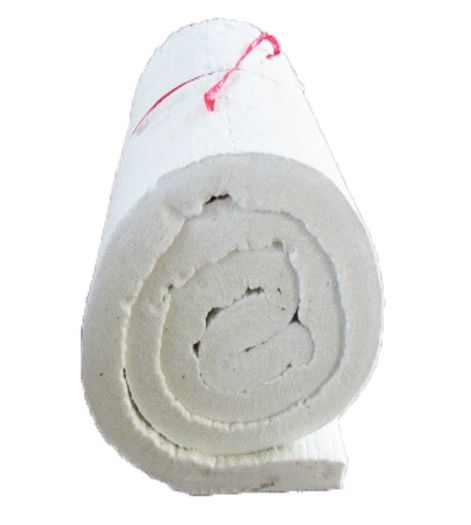
Petrochemical production involves a large amount of acidic, alkaline media, and oil-gas mixtures, imposing extremely high requirements on the corrosion resistance of insulation materials. Ceramic fiber blankets are made from inorganic ceramic fibers, which have strong chemical stability and can resist corrosion from various chemical substances. They do not undergo structural degradation even after prolonged contact with oil-gas mixtures or acidic/alkaline solutions. In contrast, many traditional insulation materials are prone to aging and damage in corrosive environments, while ceramic fiber blankets maintain stable insulation performance over the long term, significantly reducing the frequency of material replacement.
From an energy-saving perspective, the low thermal conductivity of ceramic fiber blankets brings significant benefits to the petrochemical industry. Heat loss from petrochemical equipment not only increases energy consumption but may also lead to issues such as excessive workshop temperatures and rising equipment maintenance costs. The porous structure of ceramic fiber blankets effectively blocks heat transfer. At the same thickness, their insulation efficiency is 2-3 times that of traditional materials, reducing heat loss by over 30%. A case study at a petrochemical company showed that using ceramic fiber blankets on the outer walls of cracking furnaces resulted in annual energy savings exceeding one million yuan, highlighting their economic value.
Additionally, the lightweight nature of ceramic fiber blankets is well-suited for the complex structures of petrochemical equipment. Petrochemical pipelines often have irregular layouts, and equipment interfaces, valves, and other components have complex structures. Ceramic fiber blankets are flexible and can be cut and laid according to the shape of the equipment, particularly advantageous for insulation of irregular components. Furthermore, their ease of installation reduces construction time and minimizes disruptions to production schedules, which is crucial for the petrochemical industry, which prioritizes efficient operations.
In summary, ceramic fiber blankets offer a comprehensive advantage in terms of high-temperature resistance, corrosion resistance, energy efficiency, and adaptability, perfectly aligning with the stringent requirements of the petrochemical industry. As a result, they have become the preferred insulation material in this field, providing reliable assurance for safe, efficient, and energy-efficient petrochemical production.