In the sealing systems of industrial high-temperature equipment, the performance of high-temperature sealing gaskets directly impacts the safety and energy efficiency of equipment operation. Ceramic fiber cloth, with its multiple core characteristics suited for high-temperature sealing applications, has become the preferred material for high-temperature sealing gaskets. Its advantages in terms of high-temperature resistance, sealing performance, and stability are unmatched.
High-temperature sealing gaskets must withstand extreme temperature environments, which is precisely where ceramic fiber cloth excels. In industrial furnaces, reactors, high-temperature pipelines, and other equipment, sealing components often operate at temperatures between 800°C and 1400°C. Conventional sealing materials tend to melt, age, or lose elasticity under such conditions. Ceramic fiber cloth can maintain structural stability at temperatures above 1000°C for extended periods. Even under thermal shock conditions with sudden temperature fluctuations, its fiber structure can absorb stress without cracking or breaking, ensuring the sealing gasket maintains its integrity at high temperatures and effectively prevents medium leakage.
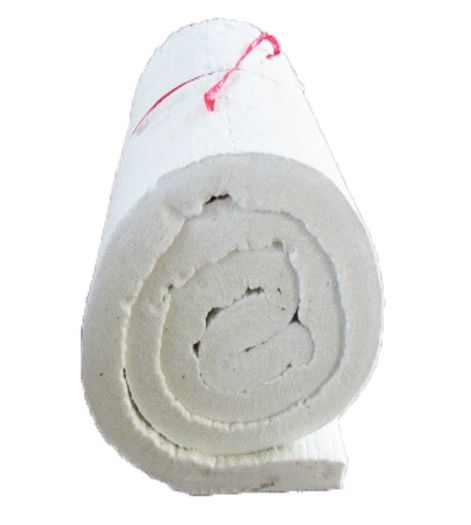
Outstanding sealing performance is the key factor in selecting ceramic fiber cloth. High-temperature sealing gaskets must tightly adhere to equipment interfaces to prevent leakage of high-temperature fluids or gases. Ceramic fiber cloth is flexible and has excellent compression and rebound properties, enabling it to fully fill microscopic gaps in sealing surfaces under bolt tightening pressure, forming a reliable sealing interface. Additionally, its porous structure between fibers allows for tight adhesion through compression. Even if the sealing surface has minor irregularities, the ceramic fiber cloth can adapt through its own deformation, avoiding sealing dead zones. This characteristic far exceeds the rigid sealing performance of metal gaskets.
Chemical stability and corrosion resistance make ceramic fiber cloth suitable for complex operating conditions. In high-temperature sealing applications, corrosive substances such as acidic or alkaline media and oil and gas are often present. Ceramic fiber cloth, made from inorganic ceramic fibers, does not react chemically with these substances and does not undergo structural degradation due to corrosion. Compared to traditional sealing materials like rubber and asbestos, ceramic fiber cloth has a service life 3-5 times longer in corrosive high-temperature environments, significantly reducing gasket replacement frequency and equipment maintenance costs.
Additionally, the ease of processing ceramic fiber cloth enhances the practicality of high-temperature sealing gaskets. It can be flexibly cut and stamped according to the shape and size of different equipment interfaces to form circular, square, or irregular-shaped gaskets, accommodating various complex sealing structures. Furthermore, ceramic fiber cloth can be reinforced with metal mesh or steel wires to further enhance the mechanical strength and tear resistance of the gaskets, meeting the sealing requirements of high-pressure and high-temperature environments.
In summary, the comprehensive advantages of ceramic fiber cloth in terms of high-temperature resistance, sealing performance, corrosion resistance, and processability perfectly align with the stringent requirements of high-temperature sealing gaskets, making it an ideal material for high-temperature sealing applications. It provides a robust sealing solution to ensure the safe and stable operation of industrial high-temperature equipment.