In industrial high-temperature equipment insulation applications, the thermal insulation performance of ceramic fiber boards directly impacts energy consumption and equipment safety. Backing ceramic fiber boards with aluminum foil is a common solution to enhance their reflective insulation effectiveness. To precisely validate this approach’s effectiveness, this verification experiment selected 1260 standard ceramic fiber boards (50mm thick) as the baseline sample, divided into two groups: the experimental group featured “ceramic fiber board + 0.1mm thick aluminum foil backing,” while the control group used pure ceramic fiber board. Multi-dimensional testing compared their reflective insulation differences.
Reflectivity testing formed the core validation step. An infrared spectroscopic reflectometer measured the samples’ reflectivity of infrared thermal radiation across the typical industrial temperature range of 200°C to 800°C. Results showed the control group’s pure ceramic fiber board had an average reflectivity of 15%-20%, with most infrared heat absorbed by the fibers and dissipated through conduction. In contrast, the experimental group’s ceramic fiber board with aluminum foil backing achieved an average reflectivity of 85%-90%. The aluminum foil’s high reflectivity redirected the majority of infrared radiation back toward the heat source, significantly reducing outward heat transfer. Particularly at 600°C, the experimental group achieved 88% reflectivity—over four times higher than the control group—demonstrating outstanding reflective insulation performance.
Thermal loss rate calculations further quantified the insulation effectiveness. A simulated high-temperature chamber was constructed, with both sample groups serving as insulation layers. The chamber interior was set to 800°C while the ambient temperature remained at 25°C. A heat flux meter continuously monitored the heat flux density on the outer surfaces of the samples to calculate the thermal loss rate. Data revealed that the control group’s pure ceramic fiber board exhibited a heat loss rate of 12%, causing a 50°C drop in chamber temperature within 24 hours. In contrast, the experimental group’s ceramic fiber board backed with aluminum foil reduced the heat loss rate to 4.5%, resulting in only a 15°C decrease in chamber temperature over the same period. This demonstrates that aluminum foil backing reduces heat loss by 62.5%, effectively stabilizing cavity temperature and decreasing energy replenishment frequency.
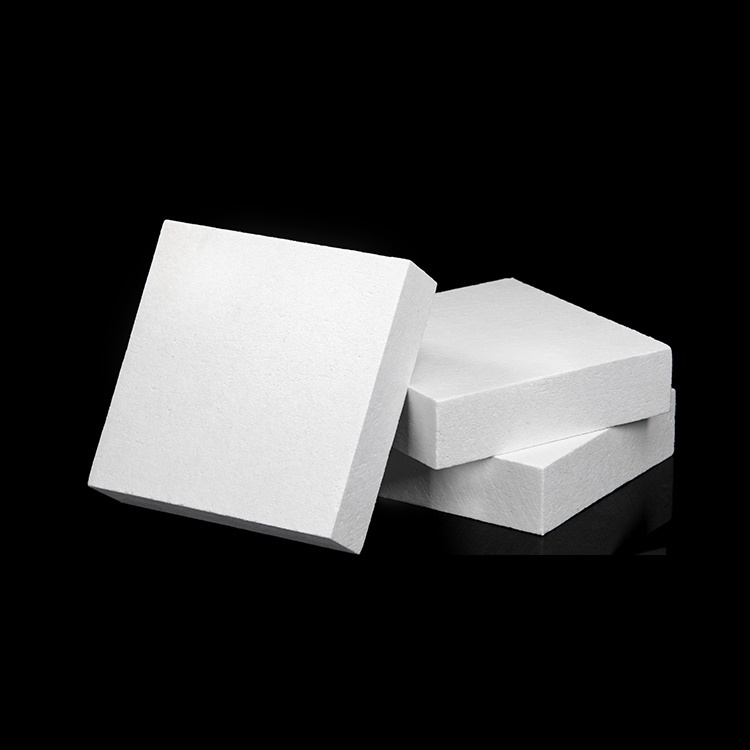
Practical simulation validates application value. During localized insulation retrofitting of an industrial kiln, two sample panels were installed on a 1m² section of the kiln’s side wall. Pre- and post-retrofit measurements tracked exterior wall temperature and energy consumption changes. Before modification, using pure ceramic fiber boards resulted in an outer wall temperature of 65°C and an average daily kiln power consumption of 800 kWh. After replacing with aluminum foil-backed ceramic fiber boards, the outer wall temperature dropped to 38°C, reducing average daily power consumption to 620 kWh—saving 180 kWh per day and lowering energy consumption by 22.5%. Simultaneously, infrared thermal imaging revealed no significant hot spots in the covered areas of the experimental group samples, indicating uniform heat distribution. In contrast, localized heat penetration occurred in the control group, further demonstrating the superior practical performance of aluminum foil-backed ceramic fiber boards.
Furthermore, long-term stability testing revealed that after 300 high-temperature cycles (25°C-800°C), the aluminum foil backing on the experimental group’s ceramic fiber boards showed no peeling or oxidation. Its reflectivity remained above 82%, with thermal insulation performance degradation below 4%. In contrast, the pure ceramic fiber board in the control group experienced long-term thermal radiation aging, causing its reflectivity to drop to 12% and thermal insulation performance to degrade by 15%. This demonstrates that backing aluminum foil not only enhances the reflective insulation effect of ceramic fiber boards but also improves their long-term stability.
Overall, aluminum foil backing for ceramic fiber boards substantially reduces heat loss through high reflectivity. In industrial insulation applications, it significantly improves energy efficiency and temperature stability, offering a cost-effective solution for upgrading ceramic fiber board performance.