In applications such as industrial furnace linings and high-temperature equipment insulation, spray-applied ceramic fiber wool is widely adopted due to its ability to conform to complex surfaces and form continuous, seamless insulation layers. The spray thickness of ceramic fiber wool directly determines its thermal performance and construction quality. Adherence to precise thickness control standards is essential to ensure stable insulation function under high-temperature conditions.
Pre-construction substrate preparation and parameter setting form the foundation of thickness control. First, remove oil, loose dust, and protrusions from the substrate surface, ensuring surface flatness deviation ≤3mm/m to prevent uneven spray thickness caused by substrate irregularities. Select the appropriate ceramic fiber wool type (e.g., standard, high-alumina, zirconia-containing) based on design requirements. Mix the ceramic fiber wool with binder at the specified ratio (typically 8%-12% binder by weight of ceramic fiber wool). After thorough mixing, verify the slurry viscosity (maintained between 500-800 mPa·s). Excessively high viscosity may hinder thickness control during spraying, while excessively low viscosity may cause fiber settling, compromising thickness uniformity. Additionally, affix thickness reference markers at 2m × 2m intervals on the substrate surface. The height of these markers must match the designed sprayed thickness, serving as a visual reference standard during construction.
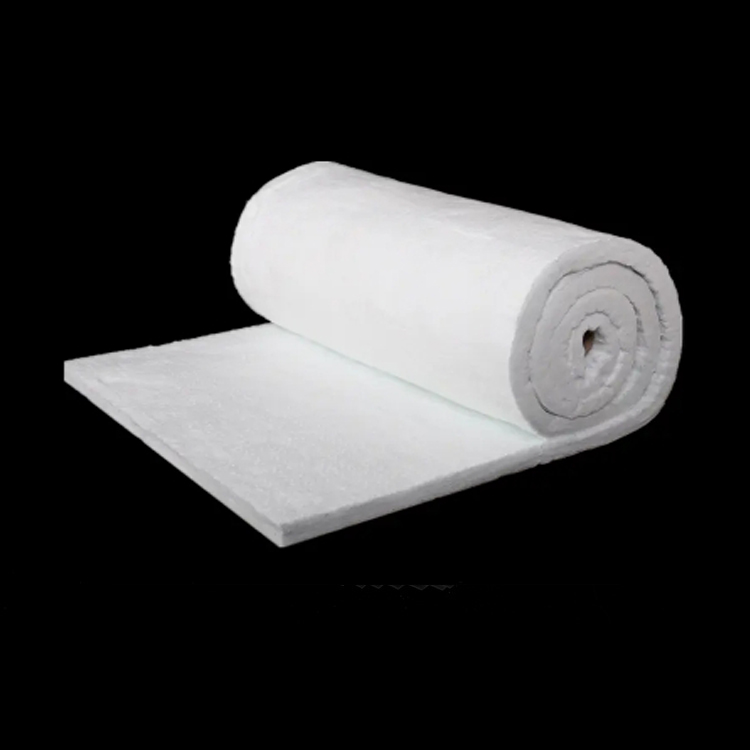
Thickness control during layered spraying is critical. Ceramic fiber wool must be applied using a “multiple-layer, incremental build-up” method. Single-pass thickness should be determined based on fiber type and substrate material: For standard ceramic fiber wool, single-pass thickness should be controlled between 20-30mm. High-alumina and zirconia-containing types, due to higher density, require reduced single-pass thickness to 15-25mm to prevent cracking caused by sagging under its own weight. After each layer is applied, allow it to dry naturally or undergo low-temperature curing (≤80°C) until the surface solidifies (no noticeable tackiness upon touch) before applying the next layer. Adjacent layers should be applied in alternating directions (e.g., first layer vertical, second layer horizontal) to ensure tight interlayer bonding and minimize voids. For a 100mm-thick insulation layer, standard ceramic fiber wool requires 3-5 spraying passes, while high-alumina types require 4-6 passes. After each pass, verify thickness against reference stakes, maintaining an error tolerance of ±2mm. Thickness inspection and correction standards must be strictly enforced. After each layer cures, use a pin-type thickness gauge to select three measurement points within a 50mm radius of the marker stakes. Measure the actual ceramic fiber cotton thickness at these points, calculate the average, and compare it to the design thickness. If the deviation exceeds ±3mm, apply additional spray or scrape off excess material for correction: If thickness exceeds limits, gently scrape excess material with a specialized scraper, avoiding damage to the cured ceramic fiber cotton layer. After completing the overall spraying, conduct a comprehensive thickness inspection. Inspection points should be spaced no more than 1m apart, with no fewer than 5 points per independent area. Ensure the overall thickness compliance rate is ≥95%, and the maximum local deviation does not exceed ±5mm. For curved surfaces such as pipes and irregular equipment, use a curved thickness gauge to ensure uniform thickness of the ceramic fiber cotton at all points on the curve, with no significant variations in thickness.
Post-application curing and thickness stability control are critical. The sprayed ceramic fiber insulation layer must cure for at least 72 hours at ambient temperature. Avoid impacts or compression during curing to prevent thickness deformation from external forces. After curing, conduct another thickness spot check to confirm no significant shrinkage (shrinkage rate ≤1%). If localized shrinkage causes insufficient thickness, promptly apply additional spray for repair. Additionally, prior to high-temperature operation, low-temperature baking (gradually heating from ambient temperature to 200°C, holding for 4 hours) must be performed. This further stabilizes the ceramic fiber cotton’s structure and thickness, preventing thickness degradation due to fiber shrinkage at elevated temperatures. This ensures the insulation layer maintains its design thickness during long-term use, consistently delivering superior thermal performance.
By strictly adhering to the above thickness control standards, spray-applied ceramic fiber wool insulation achieves uniform thickness and structural stability. This effectively safeguards industrial equipment’s thermal insulation needs, reduces energy consumption, and extends equipment service life.