The heat-blocking principle of ultra-fine ceramic fibre paper is based on the absence of convection, the effect of an infinite number of baffles, and the effect of an infinitely long path, all resulting from its unique structure. The principles of its thermal insulation are as follows: ① Absence of convection: the pores in ultra-fine ceramic fibre insulation paper are at the nanoscale, preventing the free flow of air within them; ② Effect of an infinite number of baffles: due to the nanoscale pores, there are an infinite number of pore walls, reducing radiative heat transfer to a very low level; ③ Infinite-path effect: heat conduction occurs along the pore walls, which, being nanoscale, are effectively infinite in length.
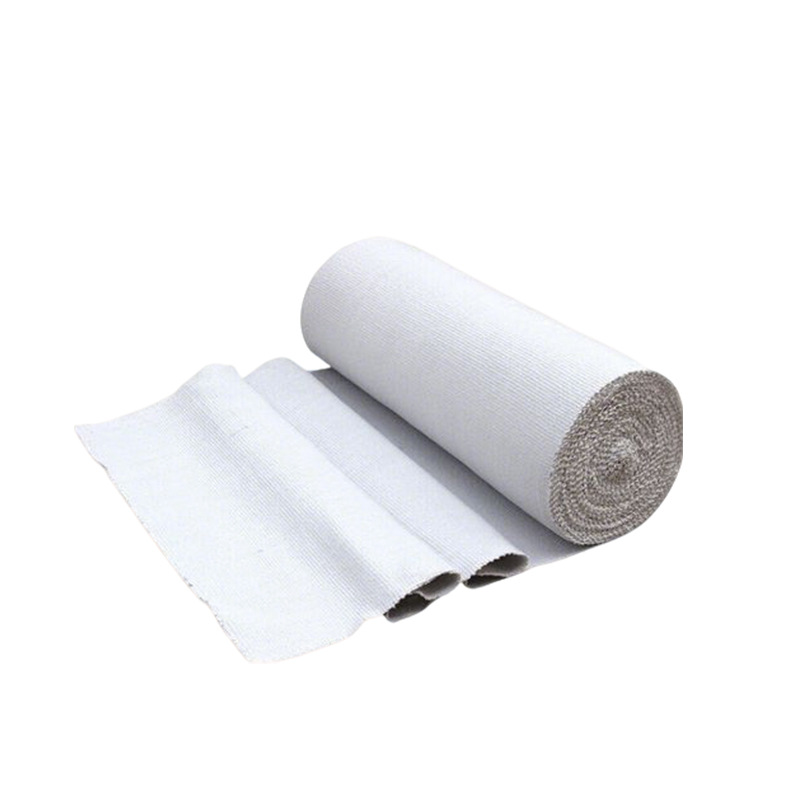
Due to its unique structure, ultra-fine ceramic fibre insulation paper demonstrates outstanding performance in multiple fields, including thermal, acoustic, optical, electrical and mechanical properties, and holds excellent application prospects in sectors such as new energy vehicles, aerospace, defence and energy. In the new energy vehicle sector, ultra-fine ceramic fibre insulation felt serves as a key material in passive protection systems, primarily providing physical isolation between battery cells, battery modules and battery packs.
Based on industrialised ultra-fine fibre spinning technologies, supporting equipment and processes, a technique has been developed for the large-scale production of ultra-fine fibre materials with an aspect ratio ≥1000 using air spinning. This technique utilises high-speed airflow to shear and deform the solution (melt), forming jets on the surface of the droplets, which are then sheared and stretched by the airflow to produce ultrafine fibres, with the fibre diameter adjustable within the range of 100 nm to 1,000 nm. High-speed air-spinning technology is suitable for the efficient, controlled and large-scale production of ultrafine fibres across a variety of material systems; it is not only applicable to the manufacture of various polymeric ultrafine fibres but can also be used to produce ultrafine fibres based on metal, ceramic and other systems. It can rapidly improve the production efficiency of ultra-fine ceramic fibre paper and reduce the unit cost of the product. Ceramic fibre wadding, with diameters as small as a few hundred nanometres and composed of purely inorganic materials, maintains good flexibility and elasticity under ultra-high and ultra-low temperature conditions, without powdering or crumbling, and possesses excellent resistance to compressive fatigue, outstanding thermal insulation properties and high-temperature stability.
Applications of Ultrafine Ceramic Fibre Paper
In the civilian sector, ultrafine ceramic fibre materials can be widely applied across numerous industries and fields, including the protection of new energy vehicles, safety protection for power batteries and energy storage batteries, energy-saving insulation for industrial pipelines, energy efficiency in construction, and the biomedical sector.
In the defence and aerospace sectors, a reliable thermal protection system is one of the key systems ensuring the safe flight of high-performance spacecraft, whilst the design of its thermal protection structure and the selection of thermal protection materials are crucial to the design and development of such systems. Ultra-fine ceramic fibre materials possess excellent high-temperature resistance, corrosion resistance and thermal insulation properties, making them one of the primary materials for thermal protection in aerospace vehicles. As high-temperature thermal insulation materials, they hold immense market potential in the aerospace and defence industries.