In building fire protection systems, the fire resistance performance of concealed engineering often determines the overall fire safety rating. As a critical fire barrier, the ceramic fiber board backing system plays an irreplaceable role in preventing the spread of fire and delaying structural failure, and its importance is increasingly evident in modern building safety design.
The ceramic fiber board backing system provides efficient high-temperature protection for the building’s main structural components. In building fires, primary materials such as steel structures and concrete rapidly lose their strength under high temperatures. For example, steel structures experience a 50% or greater reduction in load-bearing capacity at temperatures above 600°C. However, the backing system composed of ceramic fiber boards can withstand temperatures above 1000°C. By closely adhering to the surface of the building structure to form a continuous insulation layer, it can maintain the structural temperature below 300°C for up to 1.5–2 hours. This sustained insulation protection provides valuable time for evacuation and firefighting operations, effectively delaying the risk of building collapse.
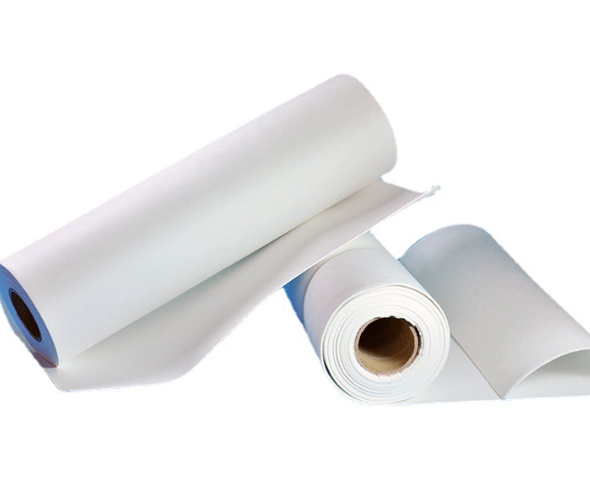
The system significantly blocks the spread of flames and smoke. In concealed spaces such as building ceilings and wall cavities, traditional backing materials are easily penetrated by flames, creating a “chimney effect” that accelerates fire spread. Ceramic fiber boards are non-combustible, and their backing systems, through staggered jointing and sealing treatments, can effectively block flame penetration while suppressing the spread of high-temperature smoke. Test data shows that walls using ceramic fiber board backing systems have flame penetration times extended by over three times compared to traditional materials, with smoke temperature peaks reduced by 40%, significantly lowering the likelihood of fire spreading laterally.
The stability of the ceramic fiber board backing system ensures the long-term effectiveness of fireproofing performance. In building environments, factors such as humidity and temperature fluctuations can cause ordinary fireproofing materials to age and crack. Ceramic fiber boards, however, exhibit excellent chemical stability and resistance to aging. They do not mold in humid environments and do not experience performance degradation due to temperature cycles over extended use. The backing system maintains structural integrity throughout the building’s lifecycle, ensuring that fire barriers do not fail during a fire due to material degradation.
Additionally, the system’s flexible adaptability enhances fire resistance reliability in complex building areas. Areas such as pipe penetrations and corners in buildings are fire-resistant weak points. Ceramic fiber boards can be precisely cut according to the structural characteristics of these areas, and customized backing designs can eliminate fire-resistant blind spots. For example, at duct penetrations through walls, the ceramic fiber board backing system can tightly wrap the gap between the pipe and the wall, preventing flames from spreading through the gaps, thereby addressing the limitations of traditional fire-resistant seals.
In summary, the ceramic fiber board backing system establishes a concealed yet robust fire protection barrier for buildings through its advantages of high-temperature protection, flame barrier, performance stability, and flexible adaptability. Its importance in enhancing building fire resistance ratings, ensuring personnel safety, and minimizing property damage makes it an indispensable key component in modern building fire protection design.