In the thermal insulation engineering of high-temperature equipment, the multi-layer stacking of ceramic fiber blankets is a key method for enhancing thermal insulation performance, and the quality of gap treatment directly determines the overall thermal insulation performance. Scientific treatment of gaps generated by the stacking of ceramic fiber blankets can effectively block heat leakage channels, ensuring that the thermal insulation performance of the ceramic fiber blankets is maximized.
Pre-construction preparations lay the foundation for gap treatment. Ceramic fiber blankets must be precisely cut according to equipment dimensions and temperature requirements, ensuring that the edges of each panel are flat with an error margin of no more than 2mm to minimize gaps caused by dimensional deviations. Specialized auxiliary materials must also be prepared, including high-temperature adhesives, ceramic fiber cotton strips, and stainless steel strapping bands. The high-temperature adhesive must be selected to match the temperature resistance of the ceramic fiber blankets to ensure it remains effective in high-temperature environments. Construction personnel must wear protective gloves to avoid direct contact with the ceramic fiber blanket, which could cause fiber shedding and affect the sealing integrity of the gaps.
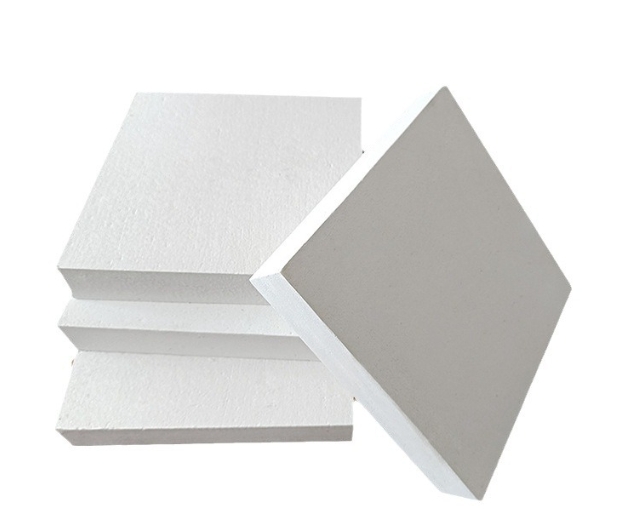
Offset layering is the core technique for minimizing gaps. When layering multiple layers of ceramic fiber blankets, the “upper layer and lower layer seams should be offset by 1/3 to 1/2 of the width” to prevent multiple seams from aligning vertically and forming continuous gaps. For example, when laying the first layer of ceramic fiber blanket, align the seams with the left edge of the equipment; for the second layer, shift the seam position to the right by more than 500mm to ensure overlapping of the seams between layers. For circular equipment or pipes, use a spiral layering method, with each layer of ceramic fiber blanket overlapping by at least 100mm, and the overlap positions offset in each layer to minimize gap formation from the source.
Gap filling and sealing should be handled in layers. For gaps narrower than 5mm, ceramic fiber cotton strips can be directly filled into the gaps. During filling, specialized tools should be used to compress the cotton strips to ensure they are tightly bonded to the ceramic fiber blanket with no voids. For wider gaps, a combined process of “cotton strip filling + adhesive sealing” should be used. First, fill the gap with ceramic fiber cotton strips to two-thirds of its depth, then apply high-temperature adhesive to the surface with a thickness of 2-3mm, allowing the adhesive to penetrate into the gaps between the cotton strips to form a sealed layer. The edges of the joints must be chamfered with adhesive to prevent stress concentration at right-angle joints, which could cause cracking.
The fixation and reinforcement process prevents the re-formation of gaps. After layering the ceramic fiber blankets, they must be secured using stainless steel straps or anchorage components, with spacing set at 300-400mm. Additional fixation points must be added at joint locations to ensure the ceramic fiber blankets are tightly bonded at the joints. For horizontally laid ceramic fiber blankets, there must be no fewer than 4 fixing points per square meter, and fixing points must be set within a 50mm range on both sides of the joint to prevent gaps from widening due to thermal expansion and contraction of the material at high temperatures. After fixation, all joints must be re-inspected, and any loose or gap areas must be confirmed by hand pressure. Non-conforming areas must be re-filled.
Post-construction inspection must not be overlooked. Use an infrared thermometer to measure the surface temperature at the joint areas, ensuring the temperature difference with other areas is within 5°C to guarantee uniform thermal insulation performance after joint treatment. After conducting trial runs on high-temperature equipment, re-inspect the joint condition of the ceramic fiber blanket to confirm no cracking or peeling occurs, ensuring the long-term stability of the multi-layered stacked structure of the ceramic fiber blanket.