In the aerospace industry, extreme environments impose stringent demands on material performance. Ceramic fiber boards, as critical thermal insulation and structural support materials, must meet multiple specialized application standards. These requirements not only concern equipment operational safety but directly impact the success or failure of space missions.
High-temperature resistance is a core requirement for ceramic fiber boards in the aerospace industry. During atmospheric flight or reentry, the surface temperature of spacecraft can suddenly rise above 1,500°C, while engine combustion chamber temperatures can reach as high as 2,000°C. Therefore, ceramic fiber boards used in this field must be capable of withstanding temperatures above 1,600°C for extended periods and must not crack or peel in thermal shock environments with rapid temperature changes. Experimental data shows that qualified aerospace-grade ceramic fiber boards must retain over 80% of their strength after being continuously exposed to 1800°C for one hour, with thermal shrinkage controlled within 2%, ensuring structural integrity under extreme high temperatures.
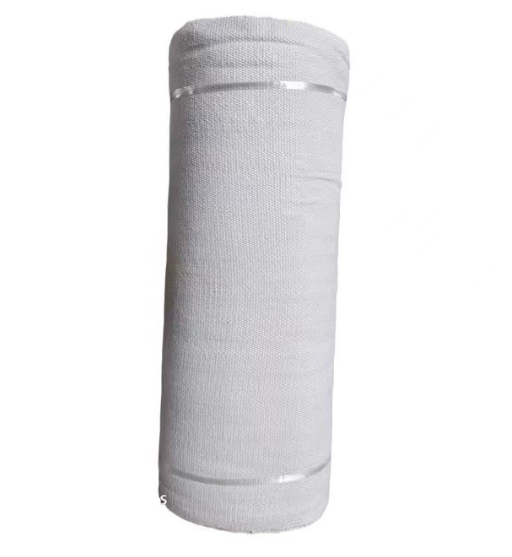
Balancing lightweight design with high strength is another critical requirement. Aerospace equipment imposes stringent weight control requirements, with every kilogram of weight reduction significantly improving fuel efficiency or payload capacity. Ceramic fiber boards must achieve lightweight design while maintaining thermal insulation performance, typically with a density controlled between 200–300 kg/m³, while also possessing sufficient impact resistance. During spacecraft vibration testing, ceramic fiber boards must withstand acceleration impacts of 10–20 G without damage to meet the mechanical environmental requirements during launch.
Low volatility and chemical stability are equally critical requirements. The high-vacuum environment in space can cause material volatiles to condense on the surfaces of optical instruments or electronic devices, affecting their performance. Therefore, the volatile content of aerospace-grade ceramic fiber boards must be below 0.5%, and they must not release harmful gases at high temperatures. Additionally, they must withstand cosmic rays, ultraviolet radiation, and atomic oxygen erosion, with a performance degradation rate of no more than 10% when exposed to the space environment for extended periods, ensuring stable operation throughout the mission cycle.
Precise dimensional control and processing accuracy are indispensable. The installation space for spacecraft thermal insulation components is extremely limited, so the dimensional tolerance of ceramic fiber boards must be controlled within ±0.5mm, with surface flatness errors not exceeding 0.3mm/m. For complex irregular structures, such as engine nozzle thermal insulation linings, ceramic fiber boards must be formed through precision molding or cutting to ensure perfect adhesion to the equipment surface, preventing localized overheating due to gaps.
These special application requirements drive the continuous upgrading of ceramic fiber board technology, enabling it to play an irreplaceable role in thermal protection and equipment insulation in the aerospace field, providing a solid foundation for the safe flight and mission completion of spacecraft.