In fields such as aerospace, cryogenic storage, and high-end equipment thermal management, vacuum environments are frequently employed to enhance insulation performance. As a classic thermal insulation material, the insulating properties of ceramic fiber wool under vacuum conditions directly determine the upper limit of composite insulation system performance. This study investigates the thermal insulation behavior of ceramic fiber wool by simulating environments with varying vacuum levels, providing scientific basis for material selection in demanding insulation scenarios.
The study first clarifies the impact of vacuum environments on heat transfer: At standard temperature and pressure, heat primarily transfers through conduction, convection, and radiation. Vacuum conditions significantly reduce convective heat transfer (higher vacuum levels weaken convective effects), making a material’s thermal conductivity and radiative insulation capacity critical factors. The experiment selected Type 1260 ceramic fiber wool (50mm thickness, 128kg/m³ density) as the sample. A testing system comprising a vacuum chamber, temperature sensors, and a heat flux meter was constructed. Tests measured the thermal conductivity and heat loss rate of ceramic fiber wool across the 200℃-800℃ temperature range under three conditions: atmospheric pressure (101kPa), low vacuum (1 kPa), and high vacuum (0.001 kPa).
Thermal conductivity test results indicate that vacuum conditions significantly reduce the overall thermal conductivity of ceramic fiber cotton. At atmospheric pressure, the thermal conductivity at 200°C is 0.042 W/(m·K), increasing to 0.085 W/(m·K) at 800°C. Under low vacuum conditions, the thermal conductivity decreased to 0.031 W/(m·K) at 200°C and 0.068 W/(m·K) at 800°C; under high vacuum conditions, the thermal conductivity further decreased to 0.022 W/(m·K) at 200°C and only 0.051 W/(m·K) at 800°C. The core reason for this change is that the vacuum environment eliminates air convection within the pores of the ceramic fiber cotton, reducing the role of air molecules in heat transfer. Only two heat transfer modes remain: solid conduction through the fibers and thermal radiation. The inherently low solid thermal conductivity of the ceramic fiber cotton itself (fiber thermal conductivity ≤ 0.03 W/(m·K)) is further accentuated, significantly enhancing the overall thermal insulation performance.
Thermal radiation suppression is another key characteristic of ceramic fiber wool under vacuum conditions. At elevated temperatures, thermal radiation accounts for a larger proportion of heat transfer. The porous fiber structure of ceramic fiber cotton scatters and absorbs radiant heat. Experiments reveal that in an 800°C high-vacuum environment, ceramic fiber cotton reflects over 65% of infrared radiation. The absorbed radiant energy is slowly conducted through minute temperature differentials within the fibers, further reducing heat loss. Comparative tests show that at the same temperature, the thermal radiation loss rate of ceramic fiber cotton in a high-vacuum environment is reduced by 40% compared to atmospheric pressure. If a layer of aluminum foil reflective coating is applied to the surface of the ceramic fiber cotton, the radiation loss rate can be further reduced by 25%, forming a highly efficient thermal insulation combination of “vacuum + ceramic fiber cotton + reflective layer”.
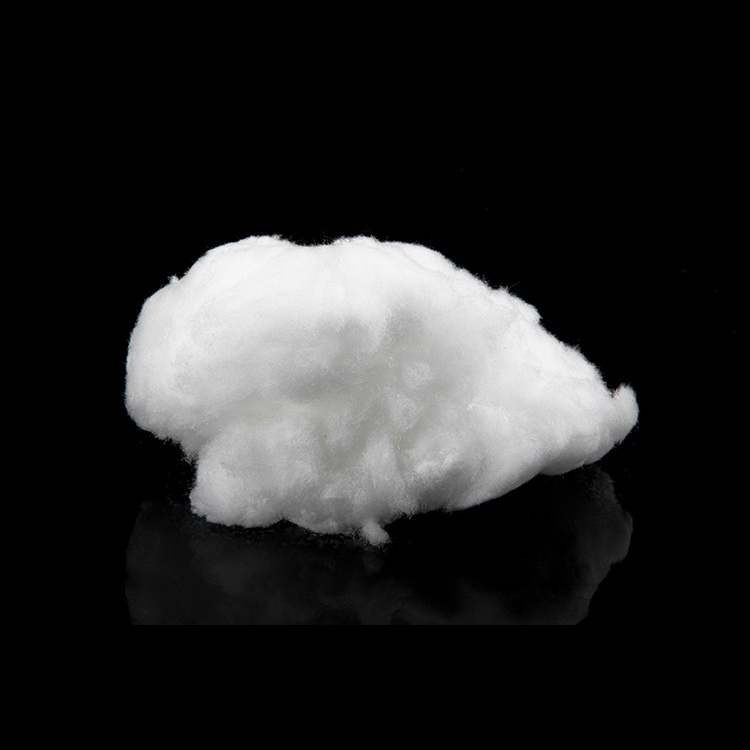
The structural stability of ceramic fiber cotton under vacuum conditions also warrants close attention. Research involving 100 “vacuum-atmospheric pressure” cycle tests revealed that the volume shrinkage rate of ceramic fiber cotton consistently remained below 1%, with no significant loosening or agglomeration of the fiber structure. This is attributable to the material’s excellent fatigue resistance— — the interlocking fiber structure undergoes slight deformation during pressure changes without fracturing, ensuring long-term integrity of the pore structure and stable thermal insulation performance. However, excessive vacuum fluctuations (e.g., frequent vacuum breaches) may cause localized fiber displacement. It is recommended to incorporate a rigid outer protective layer in practical applications to maintain the ceramic fiber cotton’s structural integrity.
Overall, the vacuum state minimizes convective heat transfer, fully unleashing the low thermal conductivity advantage of ceramic fiber wool. This enables superior thermal insulation performance across medium-to-high temperature ranges. Such characteristics make it particularly suitable for scenarios like thermal protection systems in aerospace vehicles, vacuum insulation layers for cryogenic tanks, and heat dissipation control in high-end semiconductor equipment. It provides a reliable material solution for thermal insulation demands in extreme environments while offering critical data support for designing composite insulation systems.