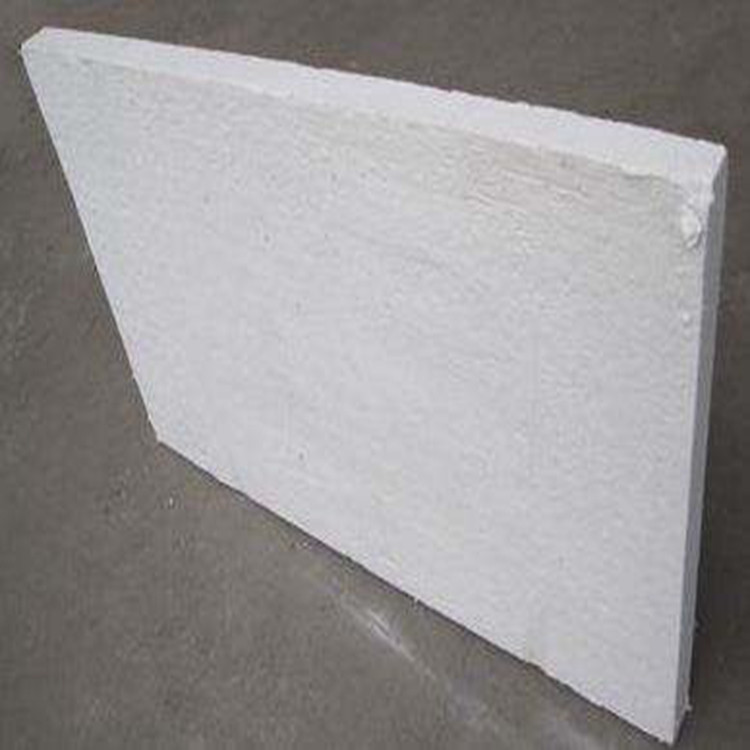
Driven by the goals of resource recycling and carbon neutrality, the disposal of waste ceramic fibre boards—a core material in industrial insulation and building fire protection—has become a critical aspect of industrial upgrading. Statistics show that China generates over 500,000 tonnes of ceramic fibre waste annually, of which only 30% is disposed of through simple landfill or inefficient recycling processes, whilst the remainder occupies land resources for extended periods and releases harmful substances. Today, based on cutting-edge domestic and international technologies and principles of materials science, Mu Yi proposes three ceramic fibre board recycling pathways that combine economic viability with environmental benefits, providing the industry with practical solutions.
I. Physical Recycling Pathway: Fibre-level Recovery and High-value Utilisation
Technical Principle: Through physical methods such as mechanical crushing, screening and impurity removal, waste ceramic fibre boards are broken down into recycled fibres. These are then enhanced using composite modification techniques to improve their performance, enabling their use in the production of reinforced composite materials.
Key Steps:
Multi-stage crushing and screening: A combined process using jaw crushers and double-roll crushers is employed to reduce waste boards to particles with a diameter of ≤5 mm, followed by separation of fibre bundles from impurities via vibrating screens. Experimental data indicates that this process achieves a fibre recovery rate of over 85%.
Fibre Purification and Activation: Centrifugal sedimentation is employed to remove agglomerates (impurities with a density >2.5 g/cm³), whilst a washing-drying process reduces the fibre moisture content to below 5%. For instance, one enterprise utilised a three-stage washing system to increase fibre purity from 72% to 96%.
Composite Modification and Reinforcement: Recycled fibres are blended with a polypropylene (PP) matrix in a 30:70 ratio, with the addition of 2% maleic anhydride grafting agent, and processed via twin-screw extrusion to produce wood-plastic composites (WPC). Tests indicate that this material achieves a flexural strength of 45 MPa and a water absorption rate of just 0.8%, making it a viable substitute for traditional timber in the manufacture of construction formwork.
Application Scenarios:
Automotive interior components: Recycled fibre-reinforced PP composites have been used in the door panels of a certain brand of new energy vehicles, achieving a 20% weight reduction and a 15% cost reduction compared to virgin materials.
Industrial insulation boards: By mixing recycled fibres with silicate cement in a 1:3 ratio and sintering at 1200°C, porous ceramic boards with a thermal conductivity as low as 0.08 W/(m·K) are produced, suitable for high-temperature kiln insulation.
II. Chemical Recycling Pathway: Nanoscale Reconstruction and Functionalisation Development
Technical Principle: Silico-aluminosilicates in ceramic fibre boards are decomposed using chemical methods such as acid hydrolysis and alkali fusion to extract nanoscale silicon dioxide (SiO₂) and aluminium oxide (Al₂O₃), which are then synthesised into high-performance ceramic precursors via the sol-gel method.
Key Steps:
Acid Hydrolysis and Purification: The waste boards are ground to a 200-mesh fineness and mixed with 15% hydrochloric acid at a mass ratio of 1:5. The mixture is stirred and reacted at 80°C for 4 hours, after which filtration yields a filtrate containing 68% SiO₂ and 22% Al₂O₃.
Nano-scale preparation: Ammonia solution is added to the filtrate to adjust the pH to 9. Following ageing, washing and drying, the mixture is calcined at 600°C for 2 hours to obtain nano-ceramic powder with a particle size of 50–100 nm. This powder has a specific surface area of 120 m²/g and exhibits higher reactivity than the original raw material.
Functional Applications: When the nanoscale powder is incorporated into epoxy resin at a 5% ratio, the resulting coating exhibits threefold improved wear resistance and corrosion resistance meeting ISO 9227 Grade 9 standards; it has been utilised for the protection of offshore platform equipment.
Application scenarios:
5G communication substrates: Polytetrafluoroethylene (PTFE) composites filled with nano-ceramic powder exhibit a stable dielectric constant of 3.2 ± 0.1 and a tangent of the loss angle of <0.002, meeting the requirements for high-frequency communication.
Environmental Catalyst Support: Titanium dioxide (TiO₂) loaded onto a nano-ceramic scaffold achieves a formaldehyde degradation rate of 92% under UV light, representing a 40% increase in efficiency compared to conventional catalysts.
III. Energy Recovery Pathways: Pyrolysis Gasification and Clean Energy Conversion
Technical Principle: By controlling pyrolysis temperature and atmosphere, the organic binders and combustible components in the ceramic fibre boards are converted into syngas (CO + H₂), whilst the inorganic fibres are recovered as raw materials for building materials, thereby achieving a ‘thermal energy–material’ dual-cycle system.
Key Steps:
Two-stage pyrolysis: Under oxygen-deficient conditions, waste boards are heated to 500°C to crack organic matter into volatile components, followed by further heating to 900°C to gasify fixed carbon. Experiments indicate that this process achieves a pyrolysis gas yield of 65% with a calorific value of ≥15 MJ/Nm³.
Gas purification and utilisation: Wet desulphurisation (limestone slurry) and dry denitrification (selective catalytic reduction) technologies are employed to reduce the concentration of sulphur oxides in the pyrolysis gas to below 50 mg/Nm³ and the concentration of nitrogen oxides to <100 mg/Nm³, meeting natural gas standards.
Inorganic fibre recovery: After magnetic separation to remove iron impurities from the pyrolysis residue, ceramic fibres with a purity of >90% are obtained, which can be used directly in the manufacture of lightweight partition panels.
III. Energy Recovery Pathways: Pyrolysis Gasification and Clean Energy Conversion
Technical Principle: By controlling the pyrolysis temperature and atmosphere, the organic binders and combustible components in ceramic fibre boards are converted into syngas (CO + H₂), whilst the inorganic fibres are recovered as raw materials for building materials, thereby achieving a ‘thermal energy–material’ dual-cycle system.
Key Steps:
Two-stage pyrolysis: Under oxygen-deficient conditions, waste boards are heated to 500°C to crack organic matter into volatile components, followed by further heating to 900°C to gasify fixed carbon. Experiments indicate that this process achieves a pyrolysis gas yield of up to 65%, with a calorific value of ≥15 MJ/Nm³.
Gas purification and utilisation: Wet desulphurisation (limestone slurry) and dry denitrification (selective catalytic reduction) technologies are employed to reduce the concentration of sulphur oxides in the pyrolysis gas to below 50 mg/Nm³ and that of nitrogen oxides to <100 mg/Nm³, meeting natural gas standards.
Inorganic Fibre Recovery: After magnetic separation to remove iron impurities from the pyrolysis residue, ceramic fibres with a purity of >90% are obtained, which can be directly used to manufacture lightweight partition panels. A demonstration project showed that 0.6 tonnes of fibre can be recovered from each tonne of waste panels, whilst simultaneously producing 200 Nm³ of clean gas.
Application Scenarios:
Distributed Energy Stations: By feeding pyrolysis gas into internal combustion engine generator sets, power generation efficiency reaches 35%, with waste heat utilised for district heating, resulting in a comprehensive energy utilisation rate exceeding 80%.
Green Building Materials Production: Recycled fibres are mixed with cement in a 1:4 ratio and vibrated into moulds to produce lightweight bricks with a density of 1.2 g/cm³. These bricks achieve a compressive strength of 15 MPa and offer superior sound insulation compared to traditional aerated concrete.
Industry Trends and Policy Recommendations
Currently, ceramic fibre board recycling technology is evolving from ‘single-process treatment’ towards ‘full-chain optimisation’. The EU’s Circular Economy Action Plan mandates a 70% recycling rate for the building materials sector by 2030, whilst China’s 14th Five-Year Plan for Circular Economy Development explicitly calls for ‘promoting the large-scale development of the industrial solid waste comprehensive utilisation industry’. Recommendations for enterprises:
Establish a closed-loop system: Integrate recycling modules into production lines to achieve an internal cycle of “production–use–recycling–remanufacturing”;
Strengthen technical cooperation: Establish joint laboratories with universities and research institutions to tackle key technologies such as nanotechnology and gasification;
Seek policy support: Apply for green loans and tax incentives, and participate in the carbon trading market to generate additional revenue.
The recycling of ceramic fibre boards represents not only a technological innovation but also a restructuring of the industrial ecosystem. Through the coordinated advancement of three key pathways—physical, chemical and energy—China is expected to achieve zero waste across the entire life cycle of the ceramic fibre industry by 2030, thereby providing a “Chinese solution” for global resource recycling.