As a special environment characterized by high temperatures and humidity, the engine room of a ship directly affects the thermal insulation performance and service life of ceramic fiber blankets. Issues such as seawater evaporation, condensation accumulation, and moisture circulation within the compartment can cause ceramic fiber blankets to absorb moisture, leading to increased thermal conductivity and reduced structural strength. To address this issue, a systematic moisture-proofing solution is required to ensure that ceramic fiber blankets maintain stable thermal insulation performance in ship engine rooms.
Material pretreatment serves as the first line of defense against moisture. Ship-specific moisture-resistant ceramic fiber blankets are recommended, as they are produced with a hydrophobic coating that significantly reduces fiber hydrophilicity. During pre-treatment, the ceramic fiber blanket can undergo waterproofing treatment using high-temperature resistant silane-based waterproofing agents, forming a hydrophobic membrane on the fiber surface. After treatment, the water absorption rate of the ceramic fiber blanket can be reduced by over 60%. For joint areas, moisture-proof sealing tape should be pre-applied to the edges to prevent moisture from seeping into the fiber interior through cuts, thereby affecting the overall moisture-proofing effectiveness.
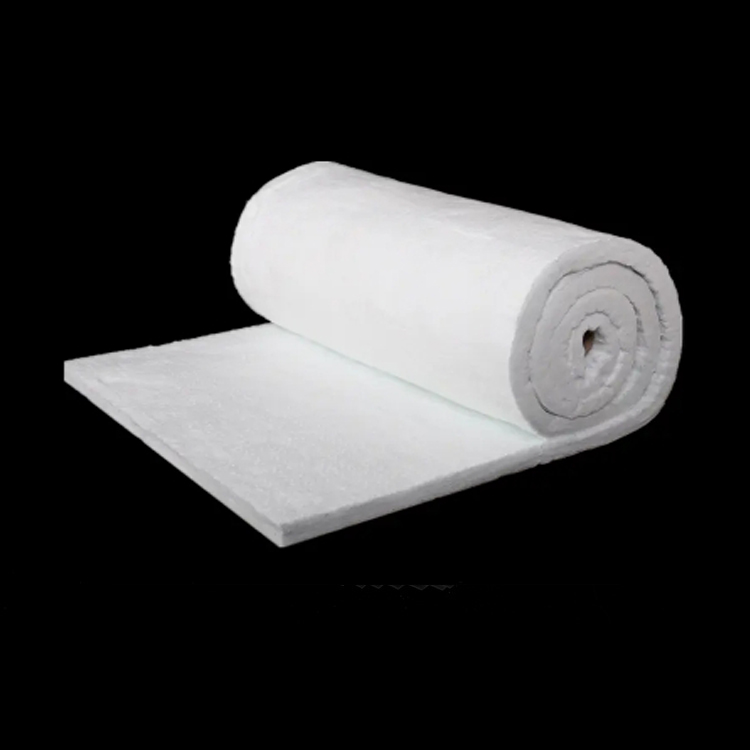
Moisture-proof design during construction is critical. The installation of ceramic fiber blankets in ship engine rooms must adopt a “layered protection” structure: the bottom layer is covered with a 0.5mm-thick aluminum foil reflective layer to block moisture from the hull bottom from penetrating upward; the middle layer consists of moisture-proof ceramic fiber blankets, with joints overlapped in a staggered pattern during installation, ensuring an overlap width of no less than 50mm. The gaps between joints are filled with ceramic fiber cotton strips and then sealed with high-temperature moisture-proof adhesive; the top layer is covered with stainless steel mesh or metal sheets to form a physical barrier, reducing direct contact between condensation and the ceramic fiber blankets. In irregular areas such as pipe penetrations, custom-formed ceramic fiber blanket prefabricated components must be used to ensure tight adhesion to the equipment surface and prevent moisture from entering through gaps.
Moisture-proof measures for routine maintenance must not be overlooked. Regularly inspect the surface of the ceramic fiber blanket for condensation or discoloration. Replace any locally damp areas promptly. Install dehumidification devices in the engine compartment ventilation system to maintain the relative humidity inside the compartment below 60%, reducing condensation of moisture on the surface of the ceramic fiber blanket. Establish a regular drying regimen. During vessel downtime, activate heating devices to raise the compartment temperature to 80–100°C, performing low-temperature drying of the ceramic fiber blankets to restore their thermal insulation performance. For vessels in long-term layup, place desiccants in the engine compartment and cover the ceramic fiber blanket surfaces with waterproof tarpaulins to block external moisture intrusion.
Through a comprehensive solution combining material pretreatment, construction protection, and routine maintenance, the moisture-related issues of ceramic fiber blankets in ship engine rooms can be effectively addressed, ensuring they maintain low thermal conductivity and structural stability even in high-humidity environments. This provides reliable thermal insulation support for efficient engine operation, extends the service life of the blankets, and reduces maintenance and replacement costs.