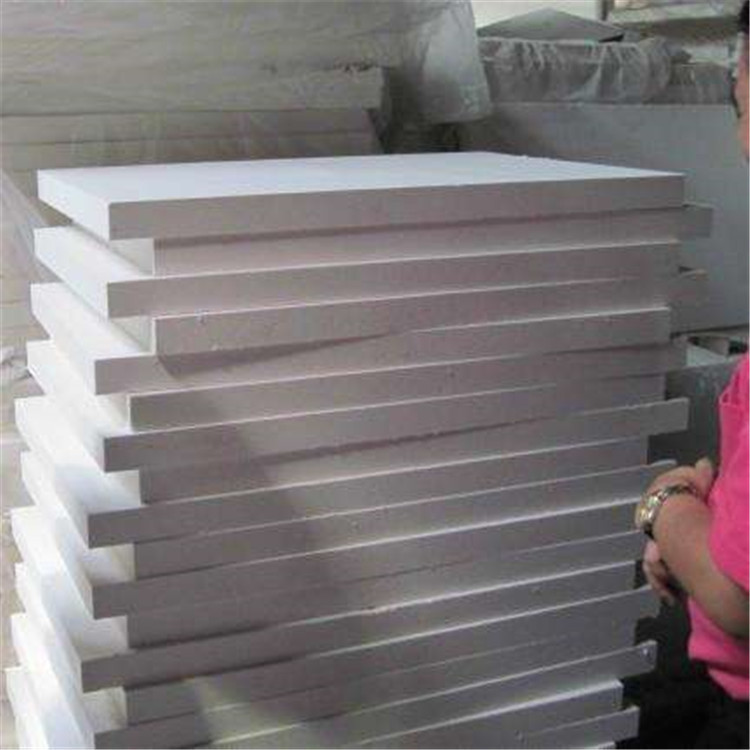
Ceramic fibre board
In order to minimise the impact of substation noise on local residents, the floor area of the multi-purpose building will be kept to a minimum. Additionally, sound-absorbing panels made of ceramic fibre will be installed inside the main transformer room; ventilation will utilise sound-absorbing louvres; and silencers will be fitted to the axial fans mounted on the walls; low-noise main transformers and low-noise ventilation equipment were selected, and natural ventilation was utilised. The aim was to complete all noise reduction sub-projects in a single phase, thereby meeting the national Class I area standards (i.e. less than 55 dB at the site boundary during the day and less than 45 dB at night).
There are numerous types of sound-absorbing materials, each with specific functions. Based on the noise characteristics of substations and environmental conditions, the traditional sound-absorbing materials widely used today fall into two main categories: porous structures and resonant structures. When noise propagates towards porous sound-absorbing materials, part of it is reflected upon reaching the outer surface, whilst the remainder enters the interior through surface pores. Subsequently, it is attenuated due to transmission friction and hysteresis resistance within the interstitial gaps, with the sound energy being converted into thermal energy and thus absorbed and dissipated. Among these, aluminium fibre sound-absorbing panels are characterised by their thin profile and light weight, featuring a sound-absorbing structure comprising a cavity behind the panel surface; this design is both simple and durable. In the case of polyester fibre acoustic cotton, when sound waves strike the material, the inorganic fillers and the matrix—though composite—exhibit differing responses; friction between the two dissipates energy, resulting in excellent sound-absorbing performance as well as water and moisture resistance. Ceramic fibre boards are hard in texture, high in strength, and maintain stable properties even in high-temperature environments. Resonant sound-absorbing materials, on the other hand, utilise the resonance phenomenon caused when the frequency of noise sound waves matches the natural frequency of the resonant structure, thereby generating energy loss to reduce noise; they are characterised by high strength and easily controllable acoustic performance. Porous structures are more effective at reducing noise in the mid-to-high frequency range, whilst resonant structures are more effective for noise in the mid-to-low frequency range. Furthermore, different types of materials have varying requirements regarding the external environment. Indoor substations demand higher standards for heat dissipation and fire resistance, whilst outdoor applications require superior performance in the face of various adverse weather conditions; environmental considerations must also be taken into account.
Sound absorption refers to the use of suitable materials or structures to dissipate the acoustic energy of noise, thereby achieving noise reduction. Research indicates that the noise reduction achieved through material loss after sound waves pass through the material is approximately 3–8 dB. As sound insulation methods may cause reflected noise to further accumulate in a particular direction, and noise bypassing the sound barrier may also cause noise pollution to the environment, sound-absorbing materials that attenuate sound waves through mechanisms such as the release of thermal energy via friction produce better noise control results. Combining sound insulation and sound absorption methods, a sealed sound-insulating and sound-absorbing chamber is constructed to house the transformer. High-strength sound-absorbing materials, manufactured from a combination of porous panels, acoustic cotton, ceramic fibre boards and steel plates, are used for the walls. By addressing the noise at its source and employing a dual approach of shielding and absorption to weaken sound waves, this is currently one of the primary measures for noise reduction in substation transformers.