In the lithium battery production process, drying equipment serves as a critical component for ensuring cell quality. Its chamber temperature must be stably maintained between 80-150°C with minimal heat loss to prevent temperature fluctuations from affecting cell consistency. Ceramic fiber boards, with their low thermal conductivity and high-temperature stability, emerge as the ideal choice for thermal insulation linings in lithium battery drying equipment. A case study of equipment retrofitting at a new energy enterprise fully validates their application value.
The company previously used traditional rock wool boards as insulation material for drying equipment, which presented two major issues: First, rock wool boards have a relatively high thermal conductivity coefficient (approximately 0.045 W/(m·K) at room temperature), causing the outer wall temperature of the equipment to frequently exceed 45°C. raising workshop temperatures and necessitating additional air conditioning costs. Second, prolonged exposure to the humid, high-temperature environment caused the rock wool to absorb moisture, resulting in a 30% decline in insulation performance after just six months of use. This required frequent replacements, increasing maintenance costs and downtime. To address these issues, the company selected 1400 high-purity ceramic fiber boards (thermal conductivity at room temperature: 0.032 W/(m·K)) for relining 20 drying units.
During the retrofit, ceramic fiber boards were custom-cut to fit the drying equipment’s chamber structure and installed using a staggered joint technique on interior walls and door panels. Around high-temperature heating tubes, 50mm-thick ceramic fiber boards were double-layered to enhance insulation. For chamber sidewalls, 30mm-thick boards were used to balance thermal performance with equipment weight. During installation, high-temperature adhesive sealed the joints between ceramic fiber boards to prevent heat leakage through gaps. A thin steel plate protective layer was added to the exterior of the ceramic fiber boards to prevent fiber shedding and contamination of the battery cells during equipment operation.
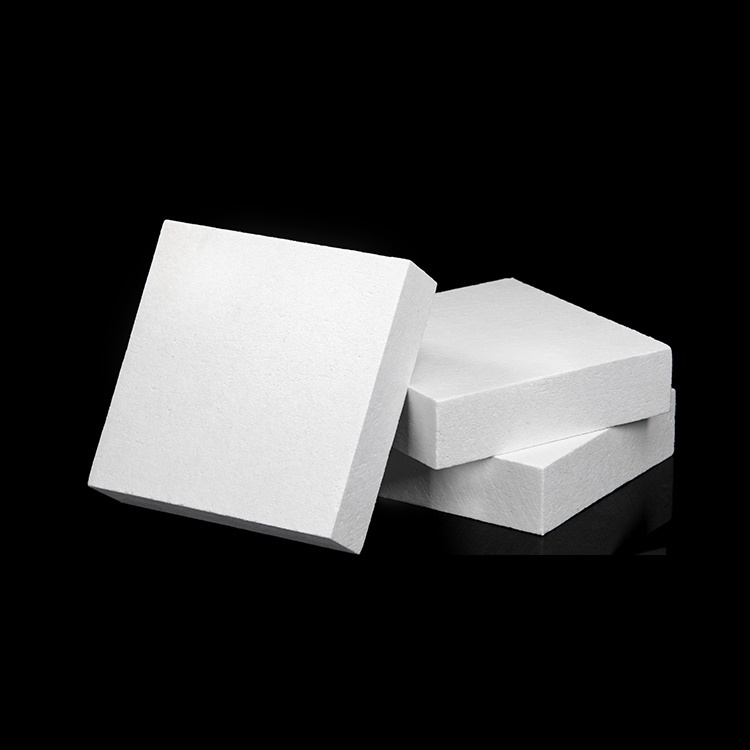
Post-retrofit measurements demonstrated the ceramic fiber boards’ significant thermal insulation effectiveness: the drying equipment cavity temperature stabilized within ±1°C of the setpoint, reducing fluctuation range by 60% compared to pre-retrofit levels. The external wall temperature dropped below 30°C, maintaining a temperature difference with the workshop environment within 5°C. This reduced workshop air conditioning energy consumption by 25%. Calculations of heat loss showed that the ceramic fiber boards reduced the equipment’s heat loss rate from 18% before modification to 6%, saving approximately 80 kWh of electricity per unit per day. More importantly, the ceramic fiber boards demonstrate outstanding resistance to moisture and heat. After 12 months of continuous operation, testing revealed only a 2% increase in thermal conductivity, with virtually no degradation in insulation performance. This eliminates the need for liner replacement, extending equipment maintenance cycles from 6 to 18 months and saving the company over one million yuan in downtime losses.
Additionally, flexible ceramic fiber boards were employed for transitional insulation in dynamic sealing zones like the inlet and outlet ports of the lithium battery drying equipment. Combining resilience with thermal insulation, these flexible boards adapt to the opening and closing motions of equipment doors, preventing damage from frequent friction that occurs with traditional rigid materials. This further safeguards the overall thermal integrity of the equipment.
This case demonstrates that ceramic fiber boards in lithium battery drying equipment not only precisely control temperature fluctuations and reduce energy consumption but also minimize maintenance costs through exceptional durability. They provide reliable thermal insulation for efficient and stable lithium battery production while offering a reference solution for thermal retrofitting in the new energy industry.